

Mold Prevention Tips You Need To Stop Mold On Windows
Most homeowners think of mold as a problem in basements, laundry rooms, or crawl spaces only. But knowing what really causes mold on windows doesn’t limit its growth to these areas of your home. Actually, mold can grow anywhere there is an accumulation of excess moisture and the proper temperature. It just so happens that the ideal temperature for human comfort - between 60 and 80 degrees Fahrenheit, is also optimum for the growth of mold and fungi.
Is Mold on Windows Dangerous?
Moldy windows can have harmful effects on your family's health. Upper respiratory symptoms along with skin and eye irritation are possible. Identifying, removing, and preventing mold around windows is crucial to your family health. In some homes, replacing the windows and frames may be the best mold prevention solution.
How To Identify Mold on Window Frames & Glass
Favorable conditions for mold are often found on or around windows. The problem for the homeowner is that mold around windows is not always visible to the eye. The joints where the glass meets the window frame, especially near the bottom is a common breeding ground for mold around window sill. Sometimes mold can be invisible on the glass, matching the color of the window itself. Other times, mold can be identified as a green, white, yellow, pink, or black - depending on the specific mold spores.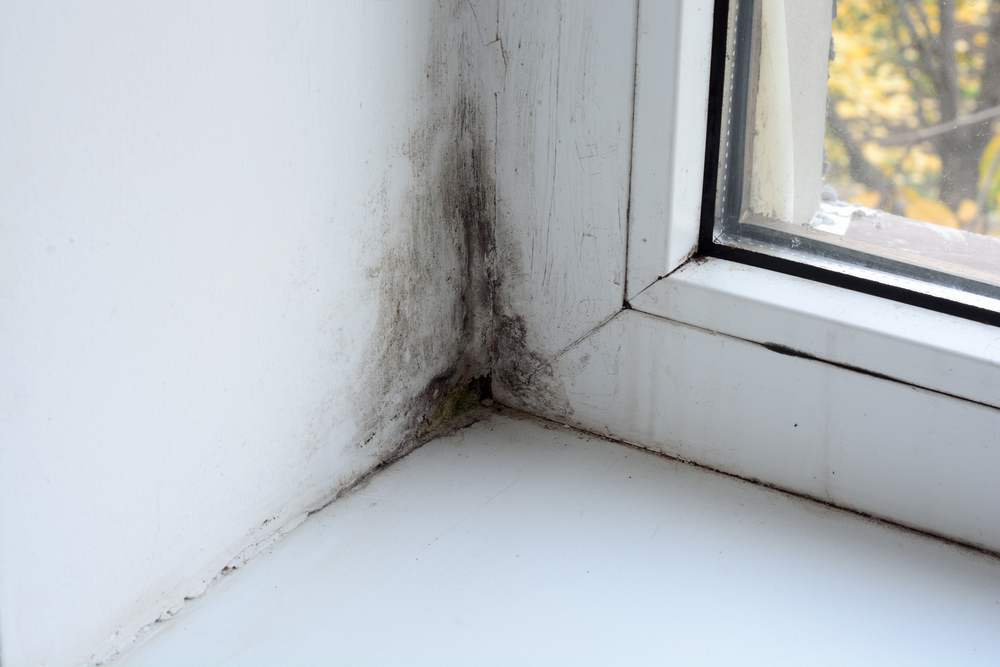
Getting Rid of Mold on Windows
The CDC cites the mold around window sill as an increasing concern, with serious possible side effects such as memory loss and lack of energy. Follow these general guidelines to remove mold from windows:
- Dampen the mold by spraying with water from a spray bottle to prevent mold spores from circulating in the air.
- It is recommended to wear gloves, an air mask, and safety goggles for personal protection.
- With a non-abrasive brush, scrub the mold around windows with a solution of 1/4 to 1/2 cup bleach added to a gallon of water.
- Wipe away all loosened mold with paper towels and discard in a sealed plastic bag.
If you prefer not to use bleach when cleaning your window frame and other surfaces, alternate methods are available. Soaking the molded areas with white vinegar followed by a good scrubbing with baking soda – or use a diluted fungicide according to the manufacturer’s instructions. Replacing your windows is always an option for ensuring the complete removal of mold on windows.
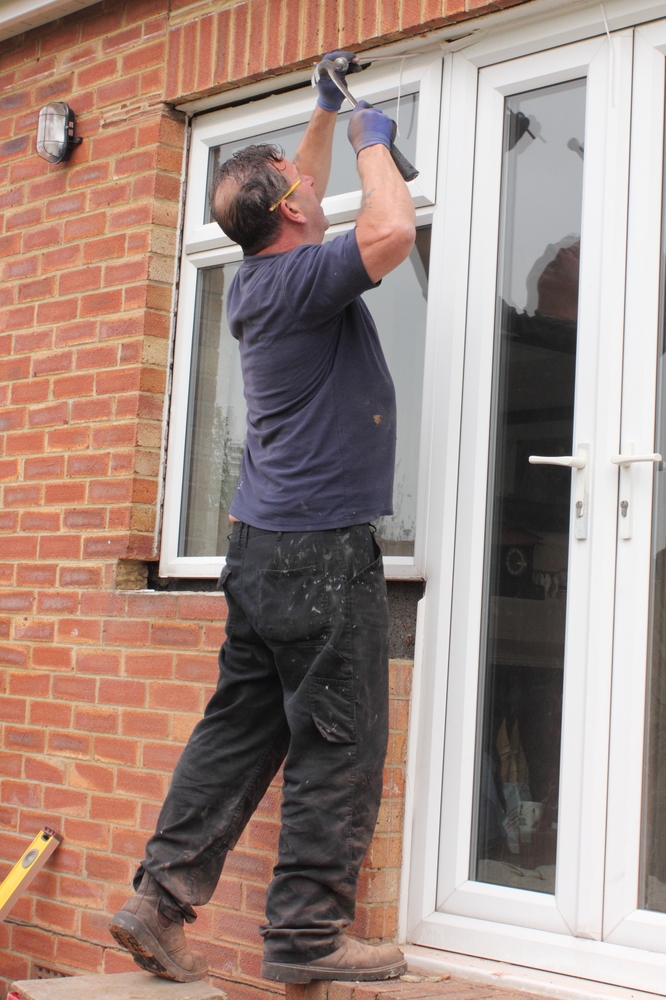
Mold Prevention Tips
Regularly clean your bathroom, kitchen, and bedroom windows to remove dust and moisture. Take steps to prevent condensation from forming on windows and other places in the home that sweat. Ventilate rooms where moisture is present, such as the bathrooms, laundry room, and kitchen. You may also consider a dehumidifier if air moisture is a problem in your home.
When to Consider New Windows
Double pane windows with moisture on the inside is an indication of the seals deteriorating and provide a breeding ground for mold. If your casement windows or wood framed windows are difficult to open and shut, this can indicate water infiltration within the frame causing swelling or inlets for debris. All these problems can be a sign of moisture infiltration, which can lead to hidden mold growth.
Takeaways:
- Consistent sinus and respiratory problems may indicate mold within the home
- Perform mold inspections by examining the joints, casing, and window sills for signs of mold growth
- Regularly clean your bedroom, kitchen, and bathroom windows
- Follow mold removal guidelines carefully to prevent mold from going airborne
- Control mold growth by removing moisture in your house and on interior surfaces
- Replace windows that may have mold growing in unseen crevices
Contact RWC, a family owned and operated window and door replacement company located in West Caldwell, New Jersey with over 50 years of experience in window replacements to solve your home's window mold problems. We don't just specialize in removing mold from windows. We'd love to use our knowledge of window care, safety, design, and installation to help you get the best windows for your home. We take pride in quality service and offer a wide range of solutions for window replacement in New Jersey to fit your budget.

From Ceiling to Floor: How to Make Your Windows Picture Perfect
There's little that can match the stunning visual effect of floor-to-ceiling windows. In fact, just looking at them gives the impression that there are no downsides – but is it true? Here are some of the benefits of these windows, along with a couple of hidden drawbacks that you should be aware of:
The Pros of Floor-to-Ceiling Windows
The biggest pro of these windows is also the most obvious; they look great. They provide excellent, panoramic views of the outdoors, bringing natural elements into the home. Their size makes the room look bigger from inside and out and they make your home appear more expensive.
Floor-to-ceiling windows also create spaces with an abundance of natural light. Combined with the great view of the outdoors they provide, this creates a relaxing space. Studies cited by the University of Minnesota have shown that views of the outdoors lower blood pressure and speed healing. This is a benefit that will make you feel better physically and mentally.
With these windows, you eliminate the need to repaint the walls in order to get a fresh view. The outdoors is constantly changing, with minor differences every day and major ones with each season. You'll be happy to put down the paintbrush once and for all, both indoors and out – and best of all, the scenery will always be more interesting than any paint color!
Adding these windows also increases the perceived value of the home. They look very opulent, and it goes without saying that would-be home buyers will expect to pay more to get a house that includes them. To maximize this effect, be sure the windows are placed so that they overlook the best possible view.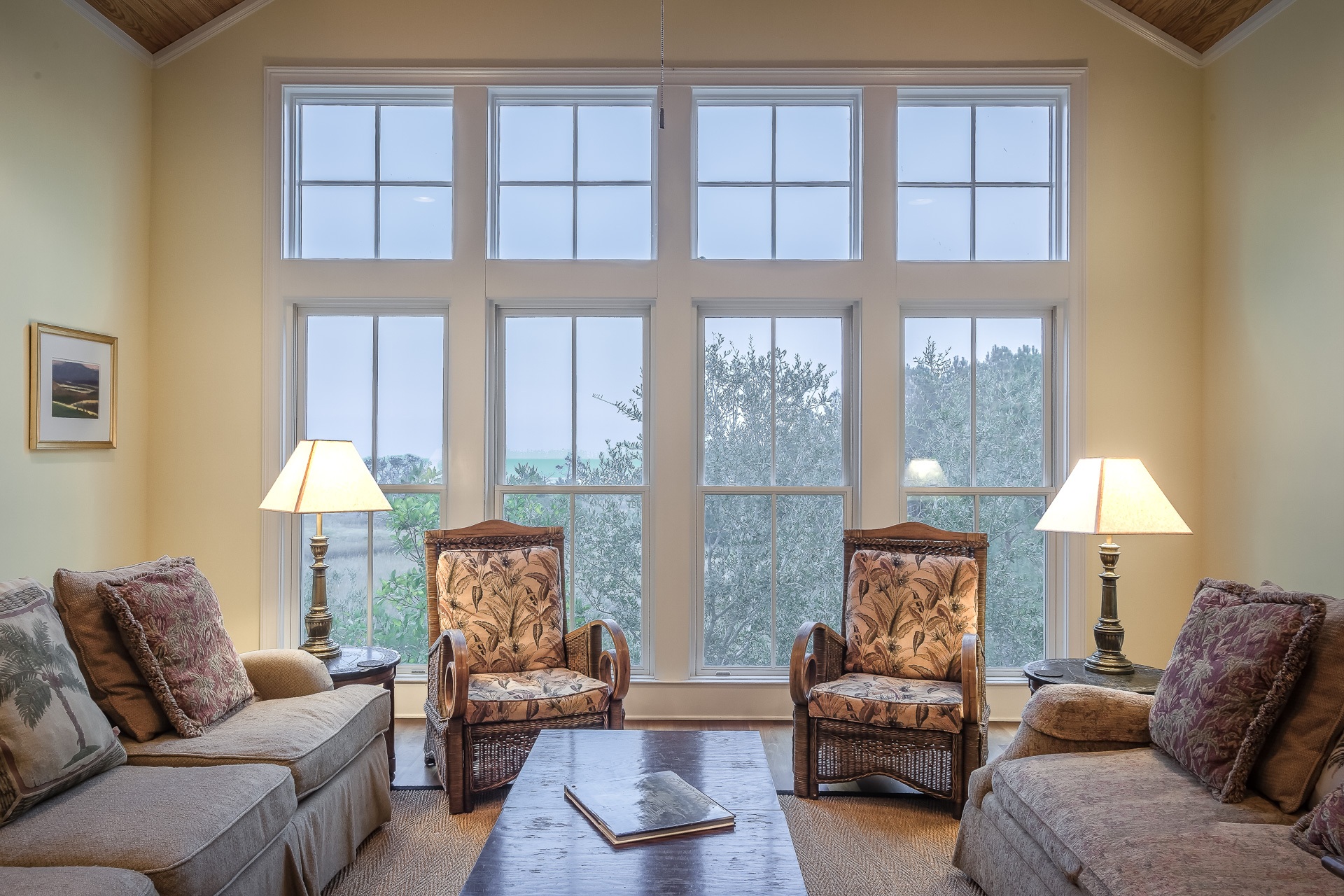
The Drawbacks
As with anything else, there are a few drawbacks to these windows. The cost of floor to ceiling windows can be quite high - from $700 to $1,600 according to Modernize.com - not only because of the amount of glass involved, but due to the amount of engineering and carpentry needed to install them. Since they can take up most or all of a wall, new beams and frames will need to be installed to take the weight of the house. This can make the price prohibitive for some homeowners. That said, home improvement financing can eliminate funding delays.
The lack of privacy offered by the bare windows can be a problem if they are facing in a direction that allows passers-by or neighbors to see in from outdoors. However, this is just a minor issue. Drapes, curtains, blinds, and other standard window coverings are available in large sizes and will provide plenty of privacy when they're closed. For privacy even while the coverings are open, consider tinted or mirrored glass. The drawback with this sort of glass is that it can block too much light if the windows are facing a shady side of the house.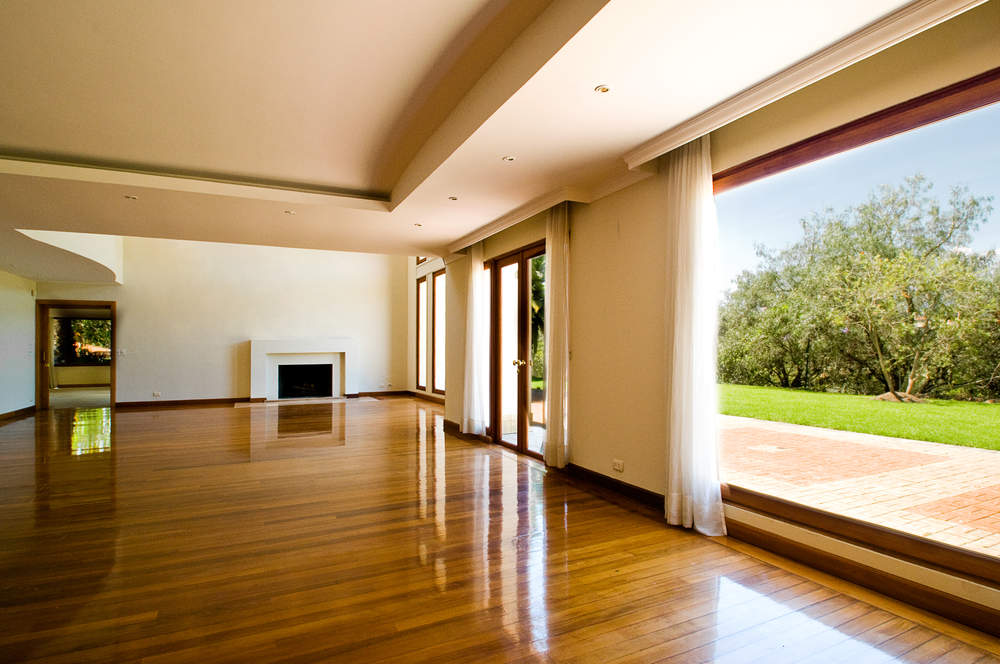
Takeaways:
- Floor-to-ceiling windows look expensive, and this can raise the value of a house
- These windows let in plenty of light
- Natural views reduce stress and can even lower blood pressure
- Large windows don't just look expensive. They actually are, so financing is often needed.
- Privacy can be a concern in some locations.
- Use window coverings or tinted glass to increase indoor privacy
When you decide to go ahead with a home renovation that includes floor-to-ceiling windows, call RWC or fill out the quick form on our site. We serve customers in northern New Jersey and can handle all of your renovations and upgrades. We'll not only install your windows, but take care of any structural updates that are required for these large openings.
Window of Opportunity: How to Keep the Heat Out This Summer
After a day spent in the summer sun, there is nothing better than heading home where you can relax and keep cool. However, if you do not have air conditioning in your home, the interior of your abode can be anything but relaxing–it may feel more like an oven.
Even though you don't have AC, there is no reason for your house to feel the heat. The key to lowering the temperature inside of a house without air conditioning is to keep the hot air outside as much as possible. Here are a few things that can help you achieve just that.

4 Simple Ways to Keep the Heat Outside
Install Awnings
Awnings affixed to the outside of the house offer shade over some of the most vulnerable spots in your home, such as entry doors and windows. If your home has a lack of mature shade around it, the bright beaming sunlight hammering down on your home can definitely be a big problem when you just want to stay cooler. You can find awnings that are quick to install, such as retractable awnings that stretch over a patio, but you can also have small awnings installed over windows and more permanent awnings installed over porches and entry doors that allow in a lot of sunlight.
Seal Any Air Leaks
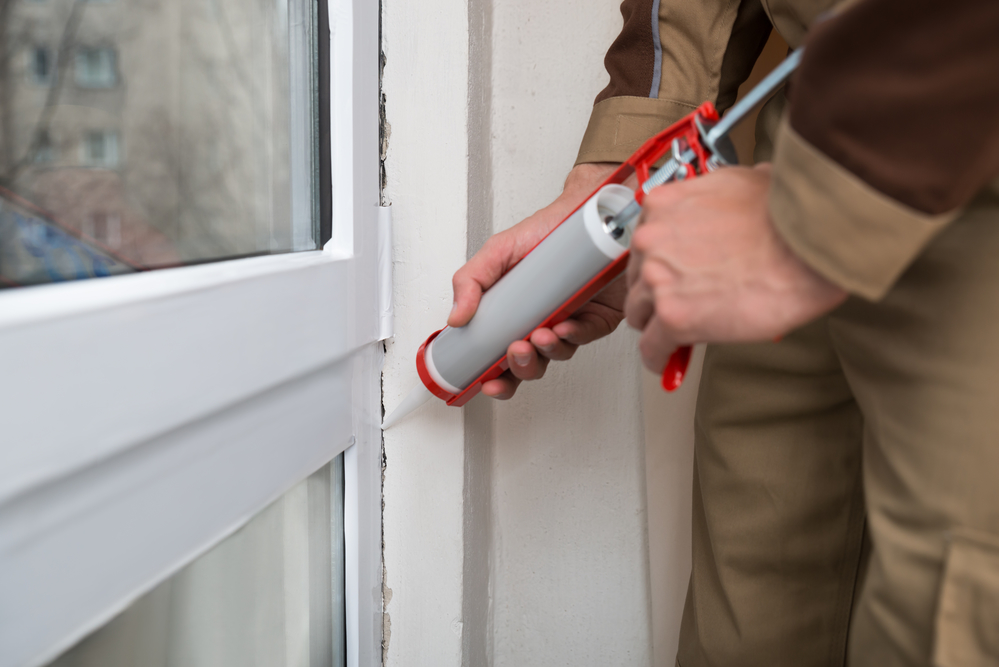
Air leaks can be a huge reason why you have a hard time keeping the heat outside of the house instead of spilling indoors. Air leaks can be a major problem around doors and windows especially, but you should also look for lack of proper sealant in places like:
- around the chimney
- around plumbing pipes leading in from outside
- around attic entryways
In most cases, you can eliminate these types of air leaks with a basic tube of caulking and a little time.
Close Blinds and Invest in New Window Coverings
Did you know that just the sunlight streaming through a window can boost the temperature inside by a dramatic amount? This is because windows that do not have UV-filtering capabilities allow the heat in, which then gets trapped inside the house. To prevent this problem, keep your blinds closed and even invest in new window coverings that block out the sun, such as room darkening drapes or curtain panels.
Consider New Windows
The primary purpose of old windows was to allow natural light into the house and there was little concern about also allowing more heat in. With advances in glass and window engineering, heat transfer through a pane of glass is not the same as it once was. Many windows have treated glass panels that reduce UV rays with low-E coatings, which is an invisible layer applied to the glass during construction. New windows are also far better insulated–often times completely preventing heat transfer through the sill or frame from the outside.
While you work to make your home a place where you can keep cool without air conditioning, remember:
- Providing shade outside of the house in the form of awnings or trees can make a huge difference.
- You can combat a huge amount of hot air with proper sealing techniques.
- The sun streaming through your windows plays a huge part in the indoor air temperature.
- Blinds and window treatments can help a lot, but can only do so much with outdated or poorly insulated windows.
Your home should be your oasis from the scorching summer heat, and sometimes, you have to work a little to make sure that is what you have–especially if you have no AC. For more tips or help with upgrades that can help you keep cool at home, contact us at RWC.
Guide to Replacement Window Options [Infographic]
So you’ve decided it is time to spruce up your home with replacement windows. You have made a great decision for sure. Replacing the windows in your home can easily bring up its overall value to give you a 90 percent return on your investment. Plus, new windows can boost home efficiency and totally renew curb appeal. However, when you take a look at all of the choices you have before you where window options are concerned, you might feel a little overwhelmed with the process of choosing the right ones.
From varying panes to assorted shapes and styles, it can seem like your choices have no end. Take a look at this guide to replacement windows before you make your final decisions and you will feel much more prepared to find the right options for your home.
Casement and Awning Windows
- Windows crank outward either vertically or horizontally for ease of opening and closing.
- Casement windows work well in areas where windows are needed but there is not a lot of space for access, such as above the kitchen sink.
- Easy to clean thanks to the simplistic design.
- The windows offer a healthy amount of natural light and air flow when needed.
- Casement windows offer the convenience of being able to double as an emergency exit route if necessary.
Bow and Bay Windows
- Usually larger in stature for cosmetic appeal and ample natural light inside of the home.
- Windows are angled from 25 to 45 degrees for a bowed shape.
- Window setup most often consists of a fixed center window and two smaller windows on either side that open, but can have multiple frames in one setup with as many as five windows.
- Bowed window designs allow the inner shape to be used as a sitting area or shelf for added architectural appeal.
- Bowed shape protrudes from the exterior of the house to gather more natural breezes than traditional windows that sit flat against the home.
- Excellent feature for family rooms, formal living rooms, dining areas, and other larger spaces in the home.
- Windows can be casement in style or double-hung.
Double Hung Windows
- Considered to be one of the most traditional replacement window types and suitable for pretty much every room in the house.
- Double-hung windows are easy to keep clean with the ability to open both sashes inward from the frame to reach the outside glass.
- Windows have a long lifespan of about 20 years when maintained well and professionally installed.
- Work well in areas where the height is taller than the available width.
Sliding Windows
- Offer a slim, vertical appearance for a streamlined and modern appearance.
- Windows usually feature sturdy locks.
- Excellent choice in areas where only a small window is needed, such as in the bathroom for ventilation and natural light.
- Feature durable sashes that are reinforced with guides for easy sliding motion and offer the ability to tilt inward for cleaning.
- Sliding windows work well in areas where there is more width available than height, and come in an array of size options.
Custom-Shaped Windows
- Shaped in versatile styles to fit in out-of-the-ordinary shaped spaces in the home, such as above a door.
- These windows are fixed in style, which means they do not open.
- Great way to add cosmetic architectural interest in areas that need a little extra natural light.
When you get a little more familiar with the different types of windows available, it will make your task of finding the right ones for your home an easier feat. While many homeowners take the easiest route and choose the same basic window styles for all of the rooms in the house, most come up with a comprehensive list of different window styles that are suitable for specific areas. If you would like more guidance with choosing the right replacement windows for your New Jersey home, contact RWC for more information.
Wonderful Windows: 4 Factors When Choosing Efficient Options
Choosing wonderful windows is an easy way to make your home more desirable, but is about far more than just aesthetic appeal. These days, with the costs of heating and cooling a home higher than they’ve ever been, homeowners must treat buying new windows for their home a little more seriously. Carefully considering the efficiency of different window types right from the start of the buying process is one of the best decisions you can make. Take a look at these four factors you should consider when choosing the most efficient window options.
Consider Double-Paned Windows
Heat and cold transfer through ordinary panes of glass can be a big problem, making it harder to ward off cold air and hot heat from the outdoors. Double-paned windows are definitely a factor to be considered when you are going for the most energy-efficient window options. These windows are designed with two panes of glass in the frame instead of just one, and the space between the two glass panes contains either a gas or vacuumed air that absorbs heat and cold so it doesn’t transfer through the interior glass. Double-paned windows are far more accessible and affordable than they once were and do an excellent job of keeping your home as efficient as possible.
Check Out Various Window Treatments
There is a great deal to be said for window treatments where efficiency is concerned. If you don’t have blinds up, for example, you could see a lot more heat transfer than usual. If you are upgrading your kitchen windows, take the time to also replace blinds, curtains, and shades. When you take the effort to replace your windows, it is also a good time to consider changing up your window treatments and making some adjustments to coincide with a more efficient overall design.
Check Energy Performance Ratings of Different Windows
Whether you go for double-paned replacement windows for your home or windows with triple panes and protective qualities, you should always be able to find the window’s energy performance rating before you buy. These ratings are given by the National Fenestration Rating Council (NFRC) after the windows have been thoroughly tested and evaluated for things like:
- heat gain and loss
- air leakage
- sunlight transmittance
By checking out the energy performance rating of various window types, you will be able to easily compare the various products you come across and make an educated choice about the best options.
Consider Window Glass Options
There’s a world of difference between old windows and new ones, specifically where the glass is concerned. Manufacturers of home windows are far more focused on creating a product that has efficient features consumers will be looking for in windows. Because of this, new window glass can be treated with all kinds of protectants, insulative layers, and components. You can find things like glass with the Low-E glazing on the interior panes that reflects the heat inside of the back into the interior space to better contain heated air in the winter. There are even windows that UV-protective glazing on the exterior panes to block out the sun.
All in all, there are four factors to be considered with window efficiency when you are making upgrades to your home, including:
- considering double-pane windows as an option for your home
- vamping up the window treatments you have in place with more efficient choices
- checking the energy efficiency rating of various window types
- taking a close look at the different types of glass in new windows
By considering these four factors when replacing windows in your home, you are bound to end up with efficient options suitable for your home. If you would like to know more about energy-efficient window options, contact us at RWC Windows, Doors, and More in New Jersey for advice.
3 Reasons You Need Modern Kitchen Windows
Putting in new kitchen windows is a great way to freshen up the room and make it more fun to cook. However, there are far more reasons to have modern kitchen windows installed than appearances alone. Here are some other reasons to get window replacement for your kitchen:
1. Temperature Control
In the winter, everyone thinks of keeping more heat inside. This is easier with new kitchen window designs since modern versions are well-insulated and contain several energy-efficient features. They are typically made with double glazing, which puts an insulating layer between the panes of glass. Some even have triple glazing. The wide frames are also insulated. Invisible coatings provide even more efficiency as well as protection from UV rays.
If you cook frequently, you know that temperature control in this area of the house isn’t all about trying to retain heat. Instead, it is just as important to be able to get rid of it on demand. Cracking the window while cooking a roast or other slow-baking item makes things much more pleasurable. All new types of kitchen windows will be easy to open, while older ones tend to be sticky or have inconvenient designs.
2. Ease of Use
Some old-fashioned kitchen windows aren’t very easy to use. One of the problems in most kitchens is that an old kitchen window is placed right over the sink. This forces you to have to reach a long distance to even access them. Such a reach makes vintage designs such as the swing-out style unfeasible for actual use.
When replacing the windows in this room, it is important to remember that reach factor. Then, you’ll be able to choose a design that puts the window’s latch work in a convenient place – not only when the window is closed, but after it has been opened.
3. To Brighten the Kitchen
A dull and dingy kitchen sucks the joy out of what would otherwise be fun, enjoyable, and rewarding activities. After all, who wants to cook and bake in a depressing interior environment? Put in new, larger windows to let the light in and invigorate your food creation time.
It is often the case that a kitchen simply doesn’t have enough windows. One or two tiny openings just doesn’t cut it. If your kitchen has this problem, let us enlarge your window openings and add more windows if needed. You’ll love it when the entire space is bright and airy because of new, custom kitchen windows.
Consider Adding These Improvements, Too
Windows are great for lighting while the sun is up, but once it goes down, you’ll need to rely on artificial light. Have us install new lighting for a great-looking solution to problems in this area. Choose creative styles that include easy-to-clean covers to protect the bulbs from any grease or other such things that might otherwise get on them.
The walls and flooring of old kitchens can get dull through the years as well. If you’re going for a new look, try adding these areas to the residential project. It’ll make a tremendous difference since both the walls and floor have plenty of surface area to see. With decor in mind, go for light colors to greatly enhance the effects of the sunlight that will pour into the room after you get your new windows.
We have been in operation here at RWC in New Jersey since 1959, and have the experience needed to do all of the renovations needed to make your kitchen into the fun and uplifting space it should be. Call us to get your old windows replaced, add entirely new ones, and to complete any other desired kitchen remodel upgrades. If you need help deciding on exactly what changes to have made, we’re also able to provide design services to ensure that everything looks great. Contact us today to get started.
The Luxury and Beauty Behind Decorative Stained Glass Windows
Windows are an essential aspect of home decor, but their full potential is rarely realized. That’s because people tend to focus entirely on the frames and the practical properties of the glass within them.
What’s missing with the traditional home view is the decorative potential of the glass itself. There are many ways to dress up windows for residential installations, ranging from a simple frosting all the way to staining. Stained glass is especially impressive in the right rooms and positions.
The Beginnings of Decorative Window Glass
Using glass in decorative ways is a practice that has existed for at least 1,000 years. It all started with the invention of colored glass, which has been around almost since time immemorial. Colored glass was first used to make small decorative objects. Later, it became possible to make the glass more durable, and it began to be used for windows.
Stained glass windows were first used in churches and other highly significant buildings, with the first use recorded as early as the 7th century. The concept, however, existed long before that: thin slices of alabaster and other naturally-colored materials were used for a similar purpose back in the 4th century.
Historic Residential and Commercial Decorative Glass
As stained glass rose in use at well-heeled churches, synagogues and mosques the demand for individual homes and businesses were starting to drive with varied versions of the beautiful decorative glass. This led to the rise of leadlights, these had designs that were much simpler than those of stained glass and were often colorless. Still, lead traces were used to create the designs in a manner similar to the stained version and therefore gave the style its name.
Other Types of Decorative Window Glass
As more technology became available other types of decorative glass came onto the scene. One of the most popular of these being frosted glass. Originally, this was relatively expensive because making it involved soaking glass in acid or sandblasting it. Then adding designs, either by etching them in or leaving them as the only plain parts, requiring, even more, time and skill.
Modern Decorative Glass Options
Today, people are far more prone to using decorative glass at home than ever before. This is because many of the options have become more affordable – sometimes substantially so. Window films, a relatively new arrival to the decorative landscape, have put a wide variety of effects within easy reach of homeowners.
One of the most popular effects provided by films is tinting, but the frosting technique is preferred for a more decorative result. Printing technology makes it fairly easy to put a design into a window, so this option is becoming popular. That said, some still prefer handcrafted frosted windows for their artistic value.
Bringing the Beauty of Stained Glass Home
True stained glass still requires the artistic design and assembly of multiple, small pieces of painted glass. Due to the extensive labor and skill that is involved in the construction, a stained glass window is an investment. Cheap alternatives, such as stained glass-style appliques, cannot pass for real and therefore are not preferred.
That said, it is far easier to get stained glass for a home today than it was during the Middle Ages. Increased trading options, improved production methods, and other such factors have dropped the price from cathedral levels and put it into the reach of, upscale homeowners. Therefore, it is being seen in modern homes more and more each day.
Thanks to the expansion of decorative glass options, all of the beautiful styles once restricted to specific buildings can be brought into the home with relative ease. To get ideas or get a quote for stained glass in your home, contact RWC today. We are experts at putting together the perfect residential decor packages.
3 Proven Reasons Your Building Needs Modern Commercial Windows
The key to making a profit while providing service when you own a building is to make the building efficient to use on a regular basis. Utilizing efficient new windows and doors is a relatively inexpensive investment which pays for itself with reduced power bills the adds value to potential clients who may lease rooms in the building and will recognize your dedication toward running a business efficiently.
Owning your first house is exciting enough as a place for you and your family to live, but owning an actual building is even more exciting as you realize the potential income it can provide for you to care for your family. While establishing a committed role in the local community with a commercial structure, the building you own will also generate income. It requires maintenance and repair costs, along with the expense of keeping it open and running as a commercial building whether you run a business inside personally or lease it to other companies for office and work space.
What to Look for when Choosing Modern Windows
Older buildings have older windows until they are upgraded with renovations and replacement windows to meet modern standards. Newly built structures have modern options available with new windows rather than replacement windows. There are several design aspects to consider when deciding on a window style whether constructing a new building or renovating an existing structure to make it more modern.
1. Energy Efficiency
Energy efficiency always saves money in the long term. A commercial building neither needs nor demands the conveniences offered by residential windows, rather, it needs windows which maintain the controlled indoor atmosphere while allowing a view of the outdoors.
2. Cosmetic Appeal
A commercial or industrial building has a primary function of allowing businesses to perform. Whether a factory, office building, or storefront, the building provides jobs to the community and are local landmarks. As such, you want it to look nice from the street, upon approach, and to the people inside. Balancing efficiency and functionality with a cosmetic appeal is achieved with the proper architectural design which incorporates windows appropriate for the building’s needs.
3. Practical Function
The practical function of new windows can supersede efficiency and appeal, yet practical function incorporates the ideas of efficiency and appeal as well. South facing windows can incorporate a glaze coating to keep heat out during the summer, north facing windows can utilize double panes with inert gasses to keep heat in during the winter. Windows facing the east allow extra light in the morning while west facing windows can produce an afternoon glare if not properly treated.
The Multiple Roles of a Contractor with Commercial Windows
The contractor is the person who actually installs the new windows. Sometimes, the contractor has to alter the original plans for practical purposes, other times he has to explain the blueprints to the client so they can understand how it is going to look.
Design Process
The architect designs the building according to client needs, and the contractor understands how to fulfill the design parameters. Sometimes, the initial design has to change according to what the contractor can do with the available resources, but a great contractor can do so while maintaining building code and utilizing amazing window designs which keep the original concept intact.
Application
Installing windows is the contractor’s job, he does it well and has the experience to know what works best for different applications. You can trust that your contractor knows how to do the job well and complete it according to your expectations.
Conclusion
Whether you are renovating or constructing a new building, be sure to contact RWC for an estimate and advice toward practical completion of the project. We can help with design plans with practical application and labor toward completing the project according to your needs.
Why A Bay Window Can Lavishly Innovate Your Home
Getting the most out of home renovations requires going beyond pure functionality. The updates should look good, be easy to use, and be fun to use as well. This ensures that they will provide long term satisfaction as well as utilitarian benefits.
One upgrade that does all of these things is the bay window. Bay windows do everything that windows are supposed to, such as let in light and keep the outside air from blowing through the house, but that’s just the start. They also add a distinctive flair to the exterior and provide a convenient place for those inside to sit and have some coffee.
What Are Bay Windows?
Bay windows are sets of windows that are arranged so that they protrude from the house. Typically, they use one large picture window at the center and a smaller window at each side. The smaller windows can be opened to let air in. In some installations, the picture window in the center is switched out to a fully-functional version as well. This version is also known as a canted window.
Why Choose This Style?
In terms of exterior decor, this style is excellent because it breaks up the flatness of a home’s outside walls. Making the same sort of shape out of a solid material would look strange, but when it’s done with windows, it catches people’s eyes in all of the right ways.
Inside the home, a bay window lets in plenty of light and becomes a focal point of the room it is part of. Since the window set sticks out, it also adds a bit of space to the inside of the house. A typical way to use this space is to add a bench. This lets people sit right in the window and enjoy the view.
Don’t These Windows Make the House Hot?
ack in the days of single-pane windows, the bay design would cause the house to heat up much like a greenhouse. Now, that problem has been solved. Insulated, double-glazed glass keeps the heat outside where it belongs and ensures that it will be very pleasant to sit in the nook created by the bay shape.
Are There Any Other Types of Windows to Keep in Mind?
There are indeed other types of windows that can really dress up a house. These are often selected to meet certain needs as well as to look good.
Bow Windows
The first is a simple variant on the bay window known as the bow window. Bow windows use several smaller subunits to create the shape, and this greatly diminishes the appearance of angles in the finished result. It’s also more typical for each subunit of a bow window to have the ability to be opened, which is good for those who want to let the breeze in on warm summer nights.
Sliding Doors
Because of the wide expanse of glass they present, these are really more like windows than doors; hence their inclusion in this list. They are so big that you can slide them back and walk right outdoors through them. They’re excellent for parts of the house that face picturesque scenes, so they’re often set up to overlook landscaped back yards.
Picture Windows
These are typically just as big as sliding doors, but are set permanently in place. They don’t open, so their main use is to allow those inside of a house to have a great view. Picture windows are quite impressive to see from the outside, as well.
Decorative Windows
Windows don’t have to be big to be impressive. Add interest to the outside of your home and bring light indoors by having a sprinkling of small, uniquely-shaped accent windows put in strategic spots.
For all of your New Jersey window needs, talk to us here at RWC. We’ll put our many years of design and installation to work for you so you get the perfect results.
Our Ultimate Guide on How to Winterize Your Windows
Winters in the Tri-State area are notoriously cold. Although last year brought milder temperatures and reduced fuel prices, experts are forecasting a remarkably cold winter with exceptionally higher fuel prices. The National Oceanic and Atmospheric Administration (NOAA) expects this winter to be 13 percent colder than last year. As a homeowner, the costs associated with keeping your home warm are of great importance. By taking strategic measures, including winterizing your windows, you can reduce the cost of heating your home and protecting your home from water getting in through your windows. As you know, the presence of moisture can lead to mold. In fact, experts estimate that winterizing your home can lead to a 30 percent reduction in the cost of heating your home. However, before you start the process of weatherproofing your windows, you should have an energy audit conducted so that you can focus on the areas of your home where you lose the most energy. Continue reading if you would like to learn about how to winterize your windows for your home.
What Is an Energy Audit?
An energy audit is a home assessment that measures your home’s efficiency. Experts consider your home tight if you are not losing energy due to cracks or drafts in your windows. Most energy audits are not exclusive to windows. In fact, your energy auditor can check your water heater and other aspects of your home to ensure proper insulation. With proper insulation, you will reduce the amount of energy you consume this winter. A reduction in energy consumption will lead to lower heating costs, ultimately. Once your energy audit is over, you can choose to replace damaged windows before winterizing them. As a professional in home improvement, our team at RWC encourages you to replace windows that are 10-years-old or older. Dated windows are more prone to energy loss, which could cost you hundreds of dollars in increased utility bills each year. Our professional window installation includes:
- The delivery of custom-built windows to your door.
- The removal of old windows.
- The installation of energy-efficient windows.
- The insulation of gaps and holes in your window frame.
- Caulking both the interior and exterior seals with high-grade caulk.
- The removal of any debris stemming from the installation of your windows.
As homeowners too, we understand the importance of your window replacement project. At every step of the way, we want to ensure that you get the look and quality you deserve when you choose RWC.
What Are Your Options for Replacement Windows?
There are many types of windows on the market. As a homeowner, it is important to choose a window that meets your aesthetic requirements. It should also meet the functional requirements you have too. The following are the most common window types and ways you can easily weatherize these windows.
Single-Hung Windows
Single-hung windows are one of the most popular types of windows. For many homeowners, single-hung windows are a cost-effective way to get the look they desire for their homes. These windows are less expensive than other windows. They also come in a wide variety of styles and finishes. One drawback to purchasing these windows is the cleaning process. Single-hung windows must be cleaned on the inside and outside too, which can be challenging for large homes with multiple windows. Single-hung windows are simple to weatherize. You should start by using your choice of weatherstripping, including using felt, spring V-seals, tubular rubber-gasket weatherstripping, or adhesive-backed foam. With the goal of eliminating drafts, you should begin the process of weatherstripping early to reduce your energy costs for the winter.
Double-Hung Windows
Another favorite for homeowners is double-hung windows. Double-hung windows open at the top and the bottom, giving you the ability to ventilate your home with ease. By opening the top portion of the window, you can allow hot air to escape your home while the open bottom window allows cooler air to come in. The ability to open both portions of the window also improves your ability to clean your windows. By tilting a double-hung window inside, you can clean the outside of your window without hassles. Another benefit to purchasing double-hung windows is improved insulation. As a standard, manufacturers equip double-hung windows with features that help prevent drafts. In fact, new double-hung windows come with weatherstripping pre-installed along with the header, seal, sash, and vinyl interlock. Although weatherstripping is included with double-hung windows, you should take measures to weatherize these windows as well. For instance, you can choose to add specialty curtains to keep heat in your home.
Casement and Awning Windows
Casement windows are windows that are attached by hinges. These windows break up the monotony when it comes to your home’s curb appeal. Casement windows are different from awning windows, in that these windows are hinged at the side while awning windows are hinged at the top. Like you, many homeowners like casement and awning windows because these windows do not obstruct your view. Neither of these windows has muntins that inhibit your view of the outside. Muntins are the strips of wood or metal embedded in your windows horizontally and vertically. Another benefit of casement and awning windows is catching breezes at an angle. By opening at an angle, casement and awning windows are capable of capturing side breezes that ventilate your home. Use the following methods to weatherstrip your casement windows: Weatherstripping- Use weatherstripping along the opening of casement windows to minimize drafts. Spray Foam- Prevents energy loss by expanding into the gaps around the frame of your window. Insulated Curtains- You can also add insulated curtains to keep the heat inside your home. The method you use for winterizing your casement and awning windows depends on what aspect of the window you are winterizing. Keep reading to learn what measures are best for movable and immovable components of your windows.
Bay Windows
Bay windows are great options for homeowners. Also, known as bowed windows, bay windows prove to be both aesthetically appealing and functional. These oversized windows give homeowners an expanded view of their lawn while offering some much-needed features like extra seating and storage. Much like other windows, winterizing your bay windows is simple. Although insulated curtains and blinds may detract from the beauty of your bay window, you can still use draft snakes, weatherstripping, and caulking to prevent cold air from entering your bay window this winter.
Specialty and Historic Windows
When you have specialty windows, such as basement windows and skylights, you can use many of the same methods for winterizing your home. However, it is important for you to consider the design and functionality of the window to be effective at winterizing specialty windows. If you have older windows, such as those found in historic homes, winterizing them is especially important. All too often, old windows are drafty and lead to substantially higher energy bills in the winter months. As such, winterizing these windows are essential to reduce costs and maintain a level of comfort you have grown accustomed to in the milder months. The best way to ensure that your historic windows are winterized without being damaged is to use materials that are easily removable. For instance, you should look for adhesives that are milder or purchase caulk that is high-quality so that it will not interfere with the construction of your windows. In addition to those methods, you should use insulated curtains and other methods to protect these windows. If you are not sure, or you do not feel confident about your ability to weatherproof specialty or historic windows, you can always hire a professional to winterize these windows for you.
Understanding Energy-Efficient Windows
There is more to choosing a window than deciding on the style of window you want. In fact, when reducing your heating bill is of the utmost importance to you, then it is essential that you consider all the aspects of getting the most energy-efficient windows. But first, it’s important to understand the benefits of energy-efficient windows.
The Benefits of Energy-Efficient Windows
Energy-efficient windows go beyond reducing the cost of your heating bills. These windows help to keep your home comfortable, including helping your home maintain consistent temperatures throughout the day. They also help you reduce the cost of your HVAC by reducing the load requirements during peak performance each day. With a reduced load capacity, you can purchase smaller systems and keep them longer. Other benefits of purchasing energy-efficient windows include:
- Less condensation on your windows.
- Improved lighting in your home.
- Enhanced views of the outdoors.
Although energy-efficient windows are more of an investment than standard windows, they are worth the investment. With the right approach, you can offset the extra cost of your energy-efficient windows by saving money on your heating bills.
Factors to Consider When Assessing Energy-Efficient Windows
Manufacturers can include a variety of measures to make windows more energy-efficient, but even trained eyes can't look at a window and determine whether it reduces your energy consumption or not. Thus, the U.S. Department of Energy (DOE) and the Environmental Protection Agency (EPA) created national ratings to simplify the process. These ratings are determined by considering each window's U-factor. A U-factor or U-value is the rate at which windows prevent heat from escaping your home. A window with a low U-factor is better at maintaining your inside temperature during the winter months than U-factors that are higher. For instance, the DOE and EPA estimate that some triple-paned windows can have a U-factor of .15, compared to double-paned windows that can register a U-factor of .30 or lower. Another important factor to consider when you are comparing the performance of potential replacement windows is the center-of-glass U-factor. The center-of-glass U-factor is a measure of the efficacy of the glaze on your windows. To simplify your analysis, you should choose a window that has a lower center-of-glass U-factor compared to the U-factor for the whole window. You should also consider the following factors when determining the best replacement windows for your home. Double-paned/triple-paned windows—These are windows that are separated by gas to increase their ability to reduce energy loss within your home. Argon gas-filled panes—Argon gas is denser than air; therefore, the presence of argon gas between window panes improves your window's ability to keep your home warm. Window frames—There are many types of window frames, and each window frame helps you keep cold air out of your home. Your options for window frames include vinyl, wood, aluminum, fiberglass, or composite window frames. Condensation Resistance—Condensation on your window is preventable. New energy-efficient windows have a condensation rating (CR) based on their ability to resist condensation. The higher the rating, the better your window will perform when your temperature in your home increases while it’s cold outside. Air leakage—Much like your U-factor, air leakage is a measurement that gives you insight into your window's ability to stop air from escaping your residence. You should choose a window that has a low air leakage (AL) rating because it will reduce the amount of heat that leaks out of your home. Within the Northern Zone, you should aim for an AL of less than .30. Solar Heat Gain Coefficient—Solar Heat Gain Coefficient (SHGC) refers to how much solar energy your window absorbs. During the summer, SHGC can work against your ability to cool your home; however, during winter months, it can help you heat your home. As a resident of New Jersey or the surrounding areas, you should strive to find a window that has a high SHGC, since air conditioning isn’t a significant factor in the summer in New England. Specifically, look for ratings that are between .35 to .60, which will help warm your home in the winter. Although these factors determine how efficient your windows are, it’s easier to consider how energy efficient the window is overall by comparing U-factor ratings.
Consider Your Climate Before Installing Windows
The climate you live in is another important consideration when it comes to choosing windows for your home. The DOE and EPA base their recommendations for windows on your climate. The United States has four different requirements for windows to be considered Energy Star windows, based on the climate. In New Jersey and the surrounding area, the Northern Zone Required Properties are imposed. Based on these factors, you should consider windows that have U-factors of .25 or less to achieve maximum performance from your windows. Although not the best, you can benefit from U-factors that are equal to or less than .30.
Ways to Winterize Windows
After installing new replacement windows using our team at RWC, it makes sense to take every measure to keep your warm air inside. Although new windows are highly energy-efficient, taking extra steps to reduce energy loss is in your best interests. Fortunately, winterizing your windows is a do-it-yourself project. The process is simple, and it will not take a lot of your time compared to other home projects. The following are simple ways you can winterize your windows in a day’s work.
Caulking
Caulking your windows entails placing a sealant around your window seal. Not only does caulking your windows fill the gaps in your window frame, but it also prevents water from getting into your home. When you get your windows professionally installed by our team at RWC, we make sure your windows are properly caulked to prevent airflow and exposure to water. It is important to note, you should only use caulking to fill cracks, joints, and gaps on immovable components of your windows. Applying caulk to components that move will jeopardize your seal and undo all your hard work. Additionally, the size of the gap, joint, or crack you are caulking matters. Never use caulk to fill a gap that is one-quarter-inch wide; otherwise, your caulk may fail.
Weatherstripping
Weatherstripping is the process of placing an appropriate barrier on your windows that will block the flow of air; weatherstripping functions much like caulk. To block gaps in your windows, try weatherstripping. The following are some materials used by professionals to weatherstrip homes.
- Felt
- Spring V-seal
- Tubular rubber-gasket weatherstripping
- Adhesive-backed foam
The method you use to block airflow depends on your preference and the part of your window you are weatherstripping. To maximize the effectiveness of your weatherstripping, you should consider using both caulking and weatherstripping when you winterize your windows. Although weatherstripping is an easy way to block air, not all joints, cracks, and gaps are conducive to this technique. We recommend you use weatherstripping around the sash of your windows and along with other moveable components of your windows. Additionally, it is important that you purchase the appropriate size of weatherstripping materials. Weatherstripping comes in various sizes and thickness; therefore, you should measure the gaps in each window to determine the appropriate weatherstripping to use; one size does not fit all when it comes to weatherstripping your home.
Insulated Curtains
When it comes to your home, it is imperative that it is always becoming. Often, winterizing your home can take away from the overall aesthetics. Fortunately, you can counter this by using insulated curtains and blinds to keep the elements out while improving your home's presentation if you don’t want to use weatherstrips around your windows. Insulated curtains are specialty curtains made with special backing. In general, the backing is constructed using a thick material, such as cotton, linen, or other durable materials. Insulated curtains work much like a blanket on your bed. The lining on the curtains works to keep heat in your home explains the DOE. Ironically, insulated curtains work great year around as well. Manufactured using thick fabrics, insulated curtains work hard to prevent the sunlight from entering your home, which often contributes to higher temperatures indoors during the warmer months. To keep your house cool without overworking your air conditioning system during the summer, invest in insulated curtains during the winter and be ready for the summer months too.
Replace Windows Screens with Panels
Layers often work better when it comes to winterizing, especially when you are winterizing your windows. With multiple layers, you can prevent all wind from entering your home. One layer you can add to help winterize your windows is adding window panels. Essentially, by removing the screens from your windows and replacing them with window panels, they will act as the first line of defense from the elements for your windows. Your window panels will block most of the wind and precipitation during the winter months while your windows block the rest.
Myths About Winterizing Windows
Before you dive into winterizing your windows, it is important to note what measures you should not take. At RWC, we like to educate and inform you to prevent you from wasting your money and your time. The following are some myths you should ignore when it comes to winterizing your windows.
Window Film Insulates Your Windows
Window film is an adhesive many people recommend to their friends and family members when they complain about a draft in their windows. It is essentially shrink wrap. You place it on your windows and apply heat until it takes the form of your window. Shrink wrapping your windows is an ineffective way to block drafts. If the wind is high enough, the shrink wrap will loosen, and you are back at square one.
Winterizing Your Home Does Not Save You Money
Winterizing your home is a great investment to reduce your energy costs. In fact, the DOE estimates that you can save between 5 to 30 percent off the cost of your energy bills. With the average cost of heating a home in New Jersey just under $106 a month, a 30 percent savings on your utility bill can save you a lot of money.
Repairing Instead of Replacing a Window Solves Draft Problems
There are times when you can easily repair a window, but there are times when it makes sense to replace your window; it’s important to know the difference. In many instances, homeowners repair a window because they want to delay getting the window replaced. However, doing this is the equivalent of throwing money down the drain when the window is severely damaged. To determine if your windows need a repair or if it needs replacing, we encourage you to give us a call. With nearly 60 years of industry experience, we are happy to assess your windows and give you an honest answer about the condition of your windows. Beyond window replacement, our team at RWC can help you with all your home improvement needs. From replacement windows to kitchen and bathroom renovations, we specialize in helping you achieve your renovation projects from the beginning to the end. We are the premier home improvement team for residents of New Jersey and the surrounding area. We encourage you to call us today so we can schedule an appointment to assess your home improvement needs.