

6 Bathroom Design Must Haves
A bathroom has a surprising number of essentials for its size, so when it’s time for a bathroom remodel, it pays to give heed to all of these elements. This will ensure that the final result is visually cohesive as well as functional. The added bonus is that everything is new, so you won’t have to worry about fixing one thing after another. Here are six of the top aspects to pay attention to, along with the floors, walls, and ceiling:
1. The Toilet
The toilet, rather than the bathtub or shower, is what most people actually think of when they hear the word “bathroom.” Yet at the same time, the literal fixture is typically taken for granted. It may be surprising to learn that there are many options to consider!
Toilets actually have styles and the chosen one will determine whether your bathroom looks new, ultra-modern, or vintage.
There are different options in height, seat circumference and flush activation. If you just want a standard toilet, that’s fine – but if you’d rather have something else, be sure to consult your bathroom renovation experts at RWC to help you find the perfect fixture for your style and preference.
2. The Sink
The sink is another fixture that has many options. Choices include a recessed sink, a free standing bathroom sink or even one that’s built into the countertop. There are various colors and materials to choose from too; ranging from upscale granite to utilitarian fiberglass. Finding a color and material that fits with your bathroom’s style is important for enhancing the appearance of the room, but it’s also suggested to choose a material that can handle some scrubbing since bathrooms should be cleaned often.
3. A Vanity
Not all bathrooms have vanities, but if you choose to utilize one in your space, the sink will likely be part of it. By combining the sink, extra storage, and grooming area into one unit, you can save valuable space later on. An alternative to a vanity would be a countertop along one wall with cabinets beneath. This option serves the same purpose as a vanity, but typically provides more surface space.
4. The Mirror
A bathroom mirror should be versatile enough to accommodate the teeth brushing, makeup application, shaving and outfit selections it sees on a daily basis. A good bathroom mirror is big enough to give you a good view of yourself, but close enough to see smaller details. It should be placed at a good height so that you don’t have to crouch down or stand on tiptoe to get a good view.
While the reflective part of a mirror gets the attention during use, its frame will draw the eye at other times. Go for a frameless model if you want a sleek look or choose a frame specific to your desired decor type. Don’t forget to use task lighting at eye level for flattering, shadowless illumination!
5. The Shower and/or Tub
The latest bathroom trend calls for a separation of the shower and tub. Big, luxurious soaking tubs and large separate shower stalls are created for these spaces. The separation allows for bigger walk in showers and soaking tubs than a typical shower tub combination. For smaller bathrooms, the tub/shower combinations is still one of the most popular options. To get the luxurious feel of a walk in shower, select a shower tub combination with sliding glass doors and add a high-quality shower head.
6. Storage
Bathroom closets and built-in drawers are great for storage. They allow things to be kept organized while hiding them from view of guests. For larger bathrooms, install cabinets, storage shelves, or a similar option that’s large enough to hold all your towels and related linens. For small bathrooms, narrower, freestanding shelving will work well without sacrificing space.
If you need bathroom remodeling in or around West Caldwell, NJ, be sure to contact us here at RWC. We have decades of experience with projects just like yours, and will be happy to design and install your new, upgraded room for you.

DIY Bathroom Renovator: Bathroom Remodel Design Mistakes To Avoid
DIY bathroom renovation can seem like a simple enough job, so many people get the idea of doing it themselves. With so many DIY shows and inspiration out there that generate countless DIY bathroom renovation ideas, it’s easy for a first-time bathroom renovator to become disillusioned and tackle a project far too advanced for them. Obvious design flaws, code violations, and other bathroom design mistakes that show a clear lack of skill are some of the biggest dangers of going about this project in the wrong way. Here are some bathroom remodel design mistakes that can be prevented by calling in the professionals:
Bad Bathroom Design Leads to a Bad Bathroom Remodel
For most, it would seemingly be clear that the most important aspect of design is usability. However, this isn’t obvious to all. One amazingly common diy bathroom renovator error that many fail to avoid is installing the toilet directly in front of the sink. This doesn’t mean “next to” the sink, or even a few feet in front of it. In the worst cases, one would have to actually stand on the rim of the toilet to access the sink.
Another design mistake is far less shocking, but will still cause a lot of hassle. While bathroom storage is important, especially in small spaces, some design options are better than others. Placing a shelf directly above the toilet sounds like a great idea, but can cause logistical problems. It is often overlooked that a certain amount of headspace is needed when arising off the toilet below. The result? The shelf ends up in the way. This causes it to get knocked when someone gets up, causing it to spill its contents directly into the now-vacant toilet – or worse, causing bruises to people’s heads.
Finally, there is the frequent error of placing the toilet paper holder too far away to reach it from the sitting position. It’s a simple, but very annoying, design flaw. This is another bad bathroom design mistake that can be easily avoided.
Code Violations
These aren’t as obvious to someone who isn’t a home inspector or similar professional, but they can be extremely dangerous. One such problem involves wires grounded to metal water pipes. Ground wires aren’t supposed to be hot, but can become so if there’s a problem with how things such as new bathroom lights are wired into the electrical system. Such problems can result in shocks or even electrocution to whoever touches the now-electrified water fixtures.
Other violations are simpler but can be just as dangerous. The failure to use ground fault circuit interrupter (GFCI) outlets in a bathroom leaves people vulnerable to accidents like electrocution from dropping an electric shaver into a sink full of water. Problems with other fixtures, like exhaust fans, can lead to fires. Bad plumbing decisions may lead to leaks or even floods.
Issues with Workmanship
Even if all of the codes are followed and a good design plan is made, there will still be the matter of workmanship. It takes time and practice – some say 6 to 10 years’ worth – to get good at things like construction, but most DIY bathroom remodelers are doing it for the first time ever. This generally results in a substandard look as well as issues that will lead to the early failure of certain parts of the room.
One particularly troublesome workmanship issue is the failure to get the flooring up close enough to the tub to allow caulk to make a good seal. In fact, caulking may not be done at all! Either way, this allows water to reach the subflooring – which is usually wood – every time a shower or bath is taken. Soon enough, the floor will rot. The same thing is true wherever any two surfaces don’t get properly sealed.
To avoid this DIY bathroom renovation guide of mistakes and extra costs, it’s important to always hire a professional for when you want a bathroom makeover. At RWC, we have decades of combined experience and will not make these errors. Give us a call to get the job done right.
7 Opportunities To Make Your Bathroom New For The New Year
The start of a new year is a great time to finally get those bathroom renovations you’ve been wanting done. It will refresh your home while providing the added benefits of a new better bathroom. Here are some excellent places to start:
1. Toilet
Toilets are pretty basic, so they tend to only be replaced when they fail. A failing toilet involves either the cracking of the tank and bowl, or a collection of mineral staining that is no longer tolerable.
Although toilets are basic in function, there are many design variations for this standard fixture. If you do need a new toilet, it’s worth putting some extra attention into it. Retro designs have become popular, these typically involve sides that are shaped as if a curved pipe is just below the surface. If retro is not your style maybe a more modern look with a smooth-sided commode is right up your alley.
2. Shower
Standalone showers are currently in, but for some bathrooms, the standard tub/shower combo still makes the best use of the space. Either way, they can be made in ways ranging from extra-basic all the way to luxuriously fancy. Note that the impressiveness of a shower usually has little to do with the shower fixture itself. Instead, it’s all about the walls, floor, and door. For a more upscale look go for some beautiful stone walls with a clear door. If minimizing maintenance is what you are after, ceramic tile walls with a shower curtain should do the trick.
3. Sink
There is a surprising array of bathroom sinks to choose from. You can stick with a basic porcelain one, or you can be adventurous and get a coated copper basin, a counter with a sunken granite sink, or any number of other versions. The main thing to keep in mind for your sink is the functionality and its usability. Be sure that the faucet position, basin size, and other attributes will work for how you intend to use it.
4. Backsplashes
The functional purpose of backsplashes is to keep splashed water from ruining the wall behind your sink. They can also be an important aspect for the all around design of the bathroom as well. You can have a new backsplash put in to go with a new vanity or countertop you installed. For modern bathrooms granite and ceramic tile are the most popular choices for backsplashes.
5. Vanities
Some decor styles work better with vanities than the traditional counter tops. A vanity can stand on its own and may or may not include a sink. Providing enough room for cosmetics and other sundries. Vanities can also have a cabinet or two beneath its top surface. These are especially popular in retro bathroom designs, but modern style bathrooms use them too.
6. Walls
Bathroom walls are usually painted, but there’s no need to stick with this style. You can have your bathroom walls tiled for a new fresh look. Bathroom wall tiles are typically smaller than ones used elsewhere, but there’s no need to stick with this style. Large stone wall tiles can work just as well and can provide a more upscale look.
7. Floor
This is one of the easiest areas to forget about, but it’s actually one of the most important. It’s very visible unless covered by rugs, so it’s a good idea to put some serious thought into it. Make sure to use sealed tiles like glazed ceramic in this room to avoid staining. Since this is for the bathroom it is best to go for a material that has a non-slip texture as well.
These are just some of the many ways you can upgrade your bathroom in the new year. For more ideas, professional designs, or installation, contact us here at RWC in New Jersey. We’ll be glad to come out and discuss your plans, give you a quote, and then get started on freshening up one of your home’s most important rooms today.
Ideas and Know-How From RWC: Incorporating Tile Into Bathroom Designs
The clean, sleek lines of a newly tiled bathroom are something to behold. But, the process to get there may be obscured by the outdated tile and stained grout staring you in the face every morning as you shuffle in to get your day started. It is indeed time for a change, but where to begin? Let’s consider three questions that may arise as you dream about this renovation.
What Are My Options?
Walk into any big box or tile store and the choices may just bury you in indecision. Material, color, shape, size and price swirl around your dazed expression. A bit of information might just help clarify things.
Material
A variety of tile materials gives remodelers plenty of room to customize their space. Some prefer the warmth of Travertine or the organic feel of slate. Each option has its unique look, feel and function.
Porcelain tile boasts a dense, hard surface that thrives in wet spaces due to its lack of absorbency. Glass tile offers a variety of colors and finishes, but brings shine for a polished look. On the other hand, stone gives a natural feel. Pebble and rock tiles add textural qualities to any space. Ceramic tile works well in wet environments. Plus, if your DIY itch takes effect after a few years, this tile receives paint well.
Color, Shape and Size
Today’s tile displays host a wide range of color choices from gleaming white to a nearly mirrored black, from natural, earthy tones to bold sea glass blues. And, the variety of shapes rivals the color palette. Octagonal, hexagonal, two-inch smaller mosaic, square and rectangular tiles offer something for everyone.
The size of the shapes extends from pebble and penny tile to 18 by 18-inch floor tiles. Add to this array the pattern options that flow from these choices, and the possibility of a one-of-a-kind bathroom design becomes reality.
Price
You guessed it. Cost varies widely as well. Glass tile promises to be a bit more costly than other options. Though, in a smaller bathroom space or as an accent, this shiny surface may just be affordable. Ceramic tile proves slightly less expensive than glass and porcelain tile reigns king of the price tag. However, it is difficult to argue this royalty’s noble qualities for the damp kingdom known as the bathroom.
Best for Bathrooms
Two tile qualities help assess which tiles do best in the bathroom: maintenance and traction. Porcelain and ceramic tiles work especially well in the wettest areas such as tubs and showers. Their easy-to-clean, stain resistant characteristics make them nearly maintenance free. And, they resist moisture.
Natural stone requires sealing and careful cleaning as its pores grab dirt. This tile fares best on floors or less wet areas. Finally, glass tile makes a beautiful statement as a border or edging, and wipes brilliantly clean. However, it is especially slippery when wet - definitely off-limits for the floor. But, using glass as an accent tile or on a wall produces the wow factor.
Other traction considerations exist as well. Be aware when shopping: Ceramic floor tiles are purposely designed with texture as opposed to their counterparts intended for walls. Grinding the surface flat rather than polishing makes honed natural stone a particularly good choice for slip resistance. Also, natural stones may be sandblasted for a similar effect.
Keeping you safely on your feet is the goal. Do not be deceived. Tile is slippery when wet. Choosing the right texture for flooring and shower tiles avoids accidents.
Where Would Tile Look Best in My Bathroom?
Where wouldn’t tile look good in your bathroom? With the variety of tiling options, there is no bathroom surface this mainstay has not touched. Floors, walls, showers or tub surrounds, countertops and backsplashes have all been graced with the beauty of tile.
How Do I Choose the Right Colors and Patterns?
Scour the Internet for inspiration. Or, talk with the designers at a local tile store. The mix and match of tile sizes, colors and patterns adds interest. Just limit your choices to three and include only one focal point. This action creates a timeless style. Also, combine subtle colors with elements of interest for a serene feel.
Fitting Your Scheme
Your current decorating scheme affects your choice of colors and pattern. When determining your style, take into account any existing features such as a vanity, sink or light fixtures. Choosing a design and color of the tiles that complement these features guards against a mismatched look. Be sure also to make choices that you will not tire of over time.
Fitting Your Size
The size of the space you are remodeling also comes into play when making your tile decisions. Smaller bathrooms expand with light-colored tiles. For example, powder rooms prove inviting in soft pastels and neutrals. Larger spaces accommodate darker, saturated hues with more grace. Bright colors work well for bathrooms which receive a good deal of light.
Updating your bathroom tile proves to be an exciting project. With all of the options available today, you are sure to create a look that is unique to you.
RWC has relieved home improvement stress since 1959. Call us today or visit us on the web for your free consultation!
The Ultimate Guide to Your Bathroom Remodel
Quick Summary
Your bathroom is one of the most used rooms in your home, and it can often use some TLC because of that fact. It may seem pretty overwhelming to think about a bathroom remodel because of all the different decisions that need to be made regarding the different aspects of the remodel. You have to decide whether or not you want to have a bathtub or shower, what color scheme to use, countertop materials, if you want a theme, and more. Every decision builds upon the next until you have this cohesive design that works for your needs and personal style. But, to get to that point, decisions have to be made from the many choices available to you.
SECTION I: Introduction to Your Bathroom Remodel
SECTION II: Countertop Options
SECTION III: Sink and Faucet Options
SECTION IV: Fun Shower Enclosures
SECTION VII: Color Scheme to Pull it All Together
SECTION IX: Your Own Luxury Spa
SECTION I: Introduction to Your Bathroom Remodel
There are a number of decisions that need to be made when going through your bathroom remodel, and it can be helpful to do your homework beforehand to start getting an idea of which styles and materials you’re most interested in when going to speak with your contractor.
Chapter 1: Decisions, Decisions
The remodeling process can seem to be overwhelming when taken in at first glance, but going with the right contractor can help to take some of that feeling away and make the process easier because you can rely on his/her years of experience. Your bathroom remodeling process can be broken down into four parts: the initial design consultation at your home, the proposal (including a design presentation and draft), final proposal and contract. After all of that, work can finally begin in your home.
You can trust that going with a contractor who has an expert staff on-hand will be the perfect partner in this process because he can take your needs, wants and personalized style and come up with a design that will work for your space.
One decision that should be easy to make in this process is the decision to use the services of a contractor. Any room in your home that has electricity and plumbing involved honestly requires a contractor’s touch, as the skills involved are usually above the typical person’s skill level. It is common for people to think about doing their own bathroom remodel to save money, but in the long-run it can often be more expensive. If something goes wrong and you have to hire a company to come in to fix the errors made during a DIY remodel, you may be facing a scary bill.
Do you know how much space you’ll need to include in your plan for your new toilet or shower enclosure? Do you know how to move light switches or fixtures? Chances are, your plan is to find the answers on Google, and this is not a safe route to take. It is usually best to bring in the experts.
You’ll want to keep your mind focused on your particular needs and your home’s space when creating your bathroom remodel plan. Some hot features that you want to keep in mind for your upcoming remodel include heated ceramic tile flooring, quartz countertops, a walk in shower enclosure in addition to (or replacing) the traditional tub, motion-activated faucets, pocket doors, high-efficiency toilets with dual-flush capabilities, and colors that add a luxury feel.
SECTION II: Countertop Options
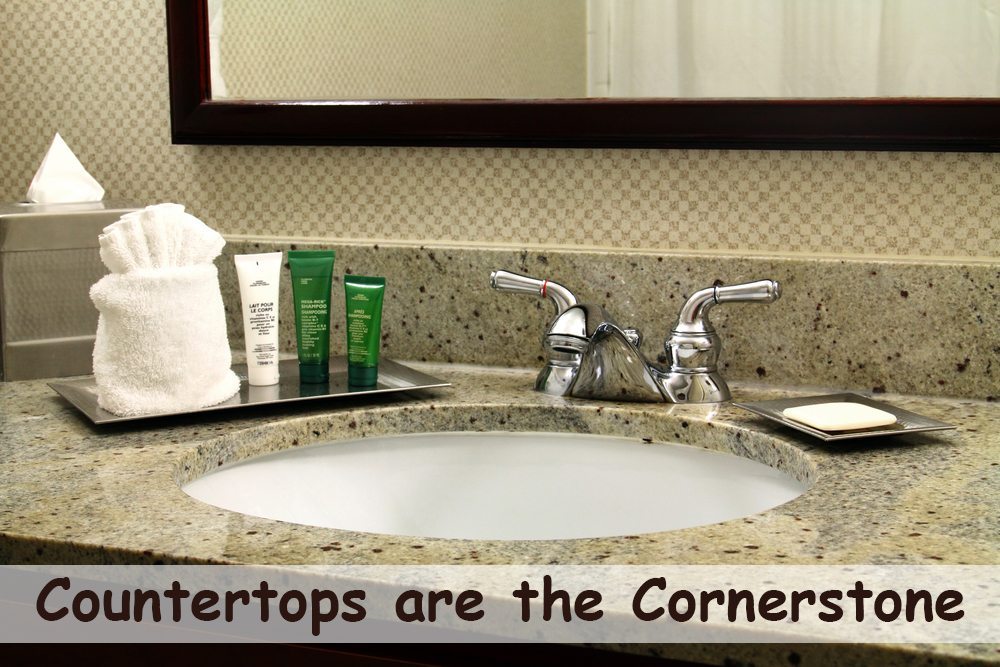
Countertops are one of the most important considerations when it comes to your bathroom. The type of materials that you choose for your countertops will be reflected in all of the choices you make with your bathroom. The color and design will play a role in every other decision made from this point forward, because the countertop is a key focal point in the room. It is often what can be seen first upon entering, and draws the eye.
Chapter 1: Natural Materials
Natural granite is often the first option that comes to mind when picking out bathroom countertops. It is durable, beautiful, easy to clean, and resists damage to its surface which can all be wonderful traits for a highly used surface in a bathroom. The main downside to using natural granite in your bathroom is the cost - as it may take up too much of your remodeling budget to get other high-quality fixtures or luxury items on your wish list. There are also manufactured quartz countertops that can be rather spectacular in a bathroom, which can mimic the look of granite - if that is the style you’re looking to achieve. Also, quartz may be easier to fit in your budget. Marble is another popular option, but often can only be used for a whole countertop in higher-end designs due to price constraints.
Chapter 2: Solid Surface
Solid surface is another great choice if you’re looking to spread your budget a bit further. These countertops are cheaper than granite, quartz, or marble. They can work with just about any design, are easy to clean, and are resistant to molds and mildews. They can also mimic higher-quality looks.
Chapter 3: Tiles and Other Ideas
Many people are opting for ceramic tiles to cover their countertops. It is an affordable option that allows for a highly customized pattern and installation. If one tile is damaged, it is easy enough to replace it rather than having to replace the whole countertop. One downside to this idea is that dealing with the grout may make your countertop harder to clean, and can attract mildews and stains. Another option is using laminates or Formica. This is an affordable option that is durable, easy to clean, and warm to the touch. The cons with this option are that it may dull or thin over time, and isn’t able to be repaired.
Chapter 4: Which is Right For You?
The ultimate decision, choosing which material to use for your countertop, will be up to you to decide. It can be helpful to weigh the pros and cons of each material before making a final decision. You should also have a chance to touch and see samples in real life before making your decision, as you may find that you prefer one material over another because of how it feels. This may require you to view available slabs of natural materials to choose from since they can vary in color, grain, and veins.
SECTION III: Sink and Faucet Options
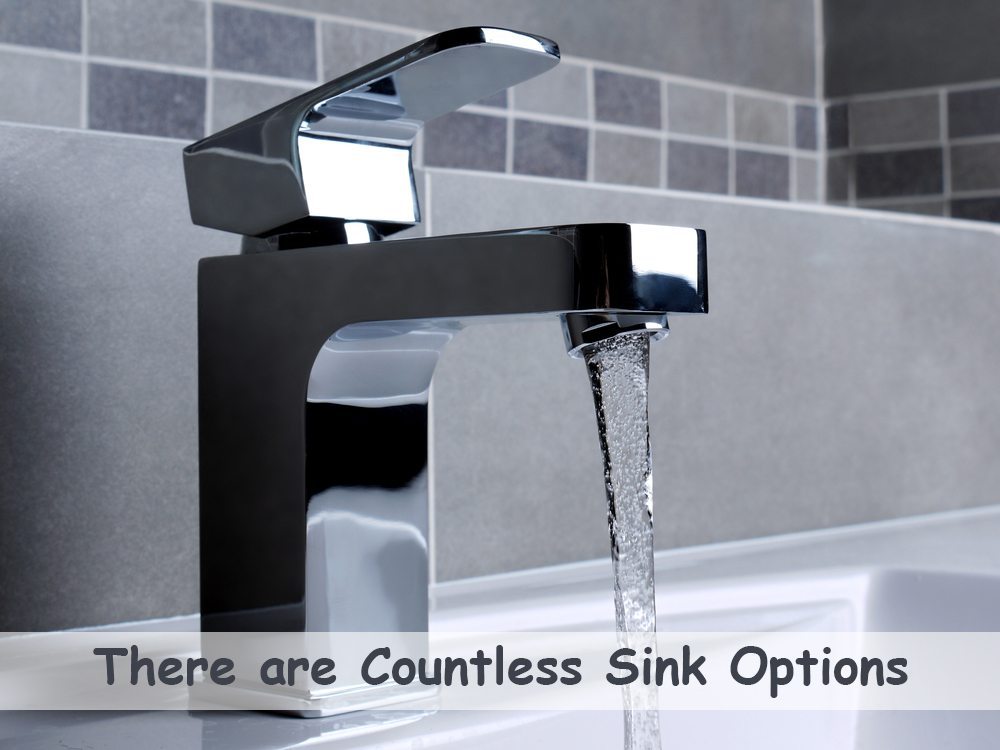
There is a myriad of options when it comes to choosing the sink and faucet options available to you. You can go with the traditional plain white basin and silver faucet fixture, separate his and her basins, or go with one that is more imaginative and creative.
Chapter 1: Sink and Faucet Ideas
There are a number of different types of sink and faucet ideas that you can use to create the perfect match on your own. Houzz is a perfect site for seeing the examples that are currently on the market. Get inspired by the pedestal sink that looks like it belongs in a farmhouse, using one large sink with two faucets to get the his and hers effect without having to invest in two sinks, or forgoing the traditional faucet for a spout that acts as a faucet.
Chapter 2: Sink Types
There are a number of sink types that you can choose from for your bathroom. There are self-rimming sinks, wall-mounted sinks, vessel sinks, undermount sinks, pedestal sinks, and console sinks. The key with picking a sink is finding one that works well with your space and will match the rest of the design of the bathroom.
Chapter 3: Faucet Types
There are several general faucet types that can be used in your bathroom. Wall-mounted faucets, centerset faucets, widespread faucets, and single-handle faucets are just a few of the many options. It can be a good idea to look for faucets that will offer water savings when it comes to deciding which brands to go with, as this will help keep your water bills low after the remodel.
Chapter 4: Unique Sink and Faucet Ideas
One of the best ways to get some ideas for a unique sink and faucet for your space is to examine what other people have in their homes. This can be the perfect way to see how these features can work well together in ways that you weren’t thinking about before starting your remodel. Some ideas include using sink bowls that look more like modern art than a regular sink, or faucets that look antique to add some additional charm to your space. You may be surprised by how a faucet and sink can go well together, even if they are seen individually and don’t seem to match up at all. Don’t be shy with your creativity in this space.
SECTION IV: Fun Shower Enclosures
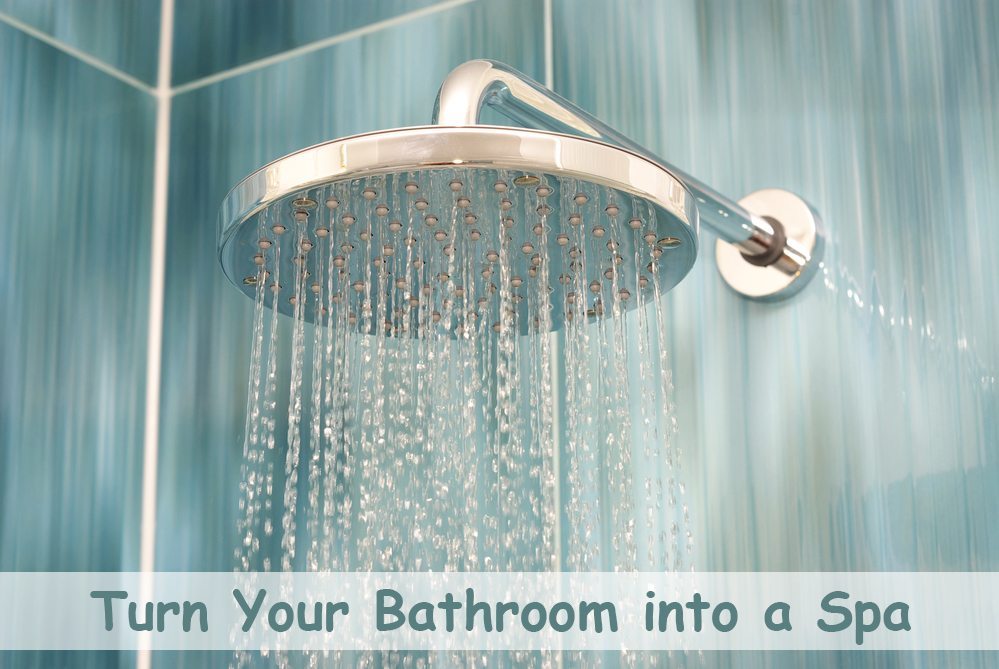
Shower stalls are not just for the locker room anymore, and many homeowners are optioning for a shower enclosure to replace or add to their traditional bathtub setup. You may want to think about how you use your current bathroom space. If you never take a bath, or are thinking of staying in your home until retirement, a shower enclosure may be the best option for you to choose. Some homeowners have the space to have both a shower enclosure and tub for those days that they want to be able to have a luxurious soak or need a place to bathe the kids.
Chapter 1: Shower Enclosure Options
Shower enclosure options have come a long way. You may have this image in your mind of one of those shower cubicles with the door that doesn’t close right or has walls that look dated. Many of the shower enclosure options today are sleek and modern. Some options have glass walls that can become opaque with the touch of a button. You can have a shower enclosure that doesn’t require any stepping up to get into it in case you require a walker or wheelchair. Think outside of the box when it comes to your shower enclosure to help it fit your space. There are plenty of ideas out there to help you come up with your ideal shower.
Chapter 2: Shower Enclosure Accessories
Your shower enclosure may provide the perfect opportunity to turn your bathroom into a spa. Technology has come a long way when it comes to the options and accessories available for your shower. No longer do you have to think about having that small shower cubicle that is just economical and space-saving without a wow factor. You can have a steam shower that offers the feeling of a sauna at home, Bluetooth speakers, touch controls, chromatherapy that uses lights to improve your mood, self-cleaning, and even aromatherapy. Be ready to be pampered in your own home.
SECTION V: Trends in Bathtubs
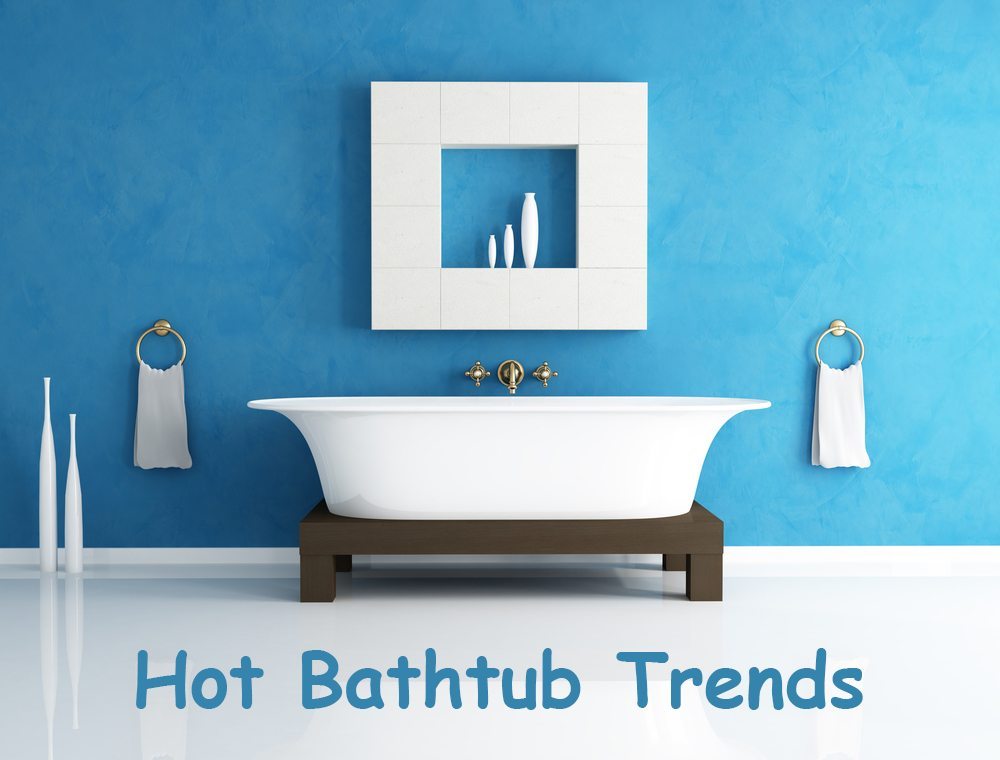
There are some really hot trends in bathtubs right now that you can incorporate into your bathroom if you’ve decided to eschew the enclosed shower or you want the best of both worlds. You can go traditional or trendy to find the perfect match for your ideal bathroom remodel.
Chapter 1: Option to Keep it Traditional
Since “old is new” is a recurring theme with trends, it shouldn’t come as too much of a surprise that the antique claw tubs are becoming very popular again. If you live in an older home, you may even have a freestanding tub that has been boxed in during a previous remodel, and won’t have to go far to find a new tub as your contractor will just need to uncover it. It may require new enamel, but that is a small price to pay to have a very chic and trendy tub in your home without having to purchase a new one.
Never fear if you don’t have this option, as there are many great-looking freestanding tubs on the market thanks to this traditional trend. You can opt for one that looks more like the tubs of old with clawed feet, or you can pick one that is more modern and sleek. Either way, you’re sure to be pleased with your new place to soak at the end of the day.
Chapter 2: Hot Trends in Bathtubs
The infinity bathtub is certainly an interesting and hot trend right now. This tub overflows, and has a continuous stream of water. Another option is a freestanding bath that is not completely freestanding in that it offers a built-in area that can be used as your shampoo and conditioner holder. Another trend is to look for a longer bathtub meant for soaking that is perfect for stretching out and relaxing.
SECTION VI: World of Tiles
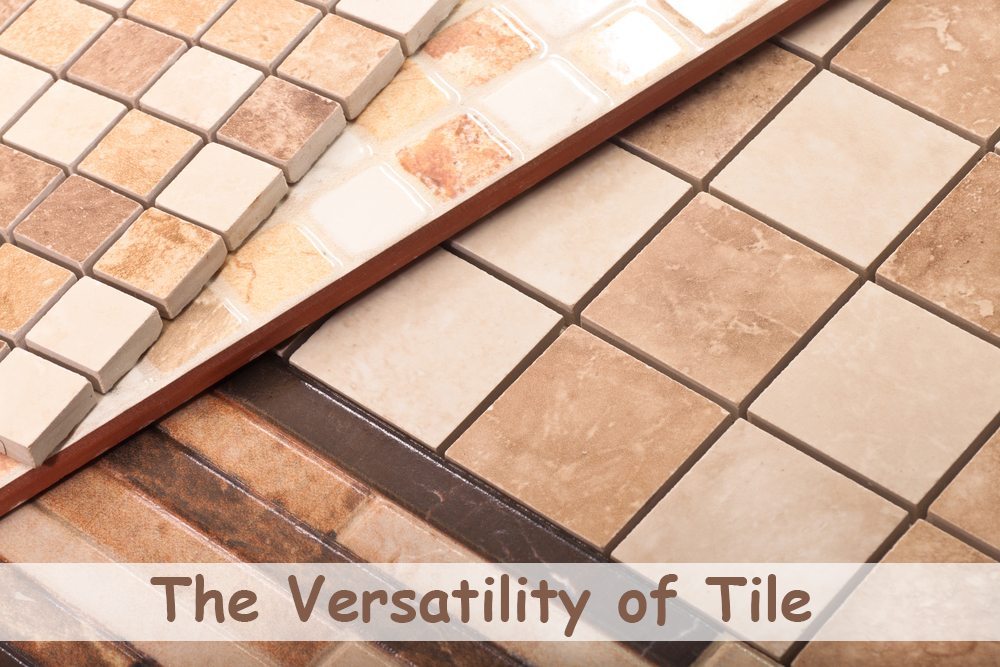
Tiles are a pretty versatile tool when it comes to your bathroom remodel. Tile is often found on the bathroom floor, walls, shower area, and even on countertops. Learn what you can about the different tiles you have to choose from for your remodel.
Chapter 1: Types of Tiles
There are a lot of different tiles that you are able to choose from when it comes to your bathroom. There are ceramic tiles, glass tiles, natural stone tiles, vinyl tiles, carpet tiles, porcelain tiles, and even wood floor tiles. Each of these tiles has their pros and cons. For instance, carpet and wood tiles may not fare very well in homes where water is constantly on the floor. Ceramic and porcelain tiles can be cooler to the touch. Glass tiles may work great on shower walls, but probably won’t work as well on the floor.
Chapter 2: Choosing Tiles
As with every other decision made for your new bathroom, the type of tile that you choose comes down to your personal preferences, style, and budget. You may find that you cannot afford the tiles that you are dying to have, so buy some of them to add them into a pattern so that you get the tiles you like without having to break the bank. A final note on choosing your tiles is that you should get tiles that you are prepared to be able to clean. Small tiles can look amazing, but that’s a lot of grout to keep clean - especially with younger children in the home. Think about your routines and what will work best for you. Be sure to touch and feel the material samples to help you make your choice easier.
SECTION VII: Color Scheme to Pull it All Together
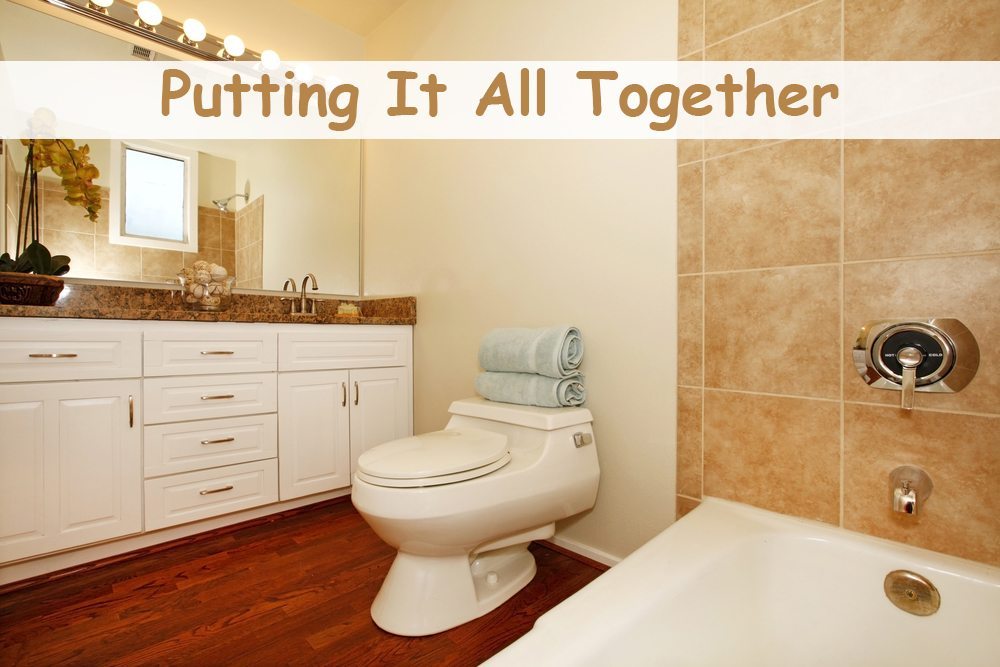
Your color scheme may seem hard to pick with the wide variety of colors available today, but these tips will help you to find the perfect shades for your bathroom. Color is such a subjective choice that will rely on your personal favorites, and what looks good in the space you’re working in. Therefore, colors may be hard to narrow down. Here are some areas that may help you with making that decision to help tie in the tiles, countertops, bathroom fixtures, and more into a cohesive look:
Chapter 1: Color Guide
Look at color guides. Color guides are specifically made to help you find colors that you like and will look nice in the space you are designing. HGTV has an excellent color guide on their website to get you started thinking about the colors you’d like on the walls. Benjamin Moore has a color chart on their website that you can use to start narrowing down which colors are in your top ten, and can help you narrow down which colors look wonderful in which rooms of your home. The size of your bathroom may be a deciding factor in this as some colors may make your space look bigger while others could make it look more cramped.
Chapter 2: Color of the Year
The color of the year is another way to get inspiration for your color choice in your bathroom. Pantone's 2016 colors of the year are Rose Quartz and Serenity, which are a pale pink and a pale blue. Benjamin Moore’s color of the year for 2016 is Simply White. You may find that one of these colors speaks to you. If you are not taken aback by any of the colors of the year, looking at them can help you gain inspiration for what color you do want.
Chapter 3: Warm Vs. Cool & Bright Vs. Pastel
There are warm and cool colors. There are bright, and pastel colors. It can be hard to narrow down which palette is going to look the best in your room. For instance, small rooms may work better with pastel colors like a pale pink, a white, or cool aqua. Small spaces may also work well with a pop of bright yellow to make them look bigger. Perhaps you might even want to keep the walls and floors the same color to trick the eye into thinking the room is bigger. Don’t be shy about combining colors, either. You may want to have an accent wall or fixture that has your favorite color, and then go with a white or another color that offsets that accent wall or fixture.
SECTION VIII: Pick Your Theme
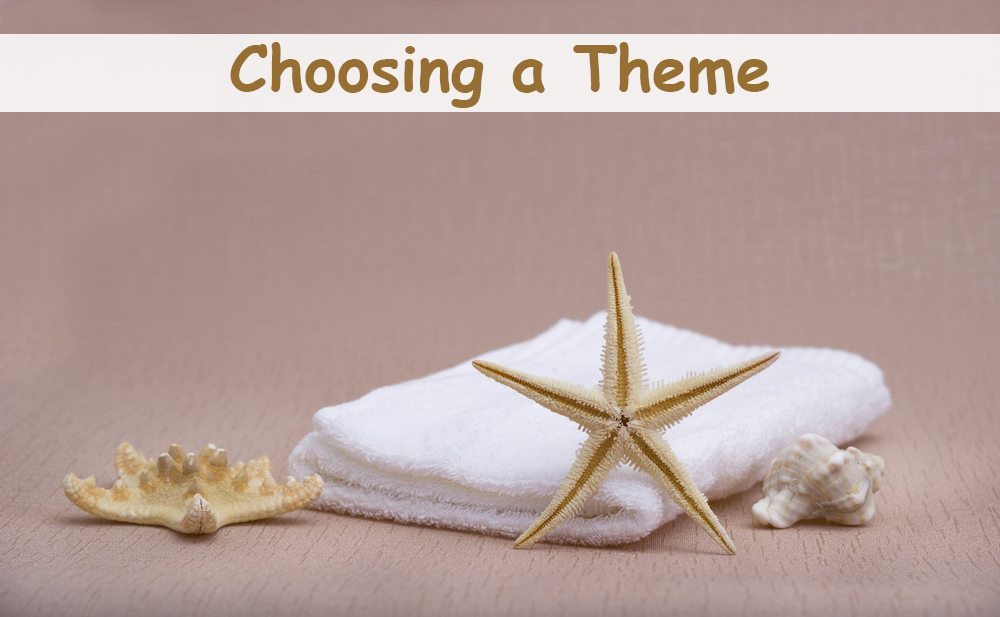
Vacation homes, beach homes, and even guest bathrooms can work great with a theme that will help to make the space fun and inviting.
Chapter 1: Bathroom Theme Options
You can take your color scheme and go one step further by adding a cute theme. This may not work for every bathroom or person’s taste, but there are some cute ideas out there that can help you with find the perfect theme for your bathroom. Log cabin style bathrooms can be simple elegant, making you feel like you’ve gotten back to nature. Beach homes and beach lovers will enjoy adding their love of the beach to their bathroom’s theme. There are plenty ideas on how to add beach accents to the bathroom to give it a fun feel.
Be creative and unique. Incorporating a theme doesn’t mean that you have to go overboard with lots of trinkets and pictures. You can reinforce your theme simply by incorporating little touches that help add some personality and character to the room. This is a great point for smaller bathrooms that might seem overwhelmed with a more concerted attempt at a theme. Some ideas include using chalkboard paint, upcycling items, using screens, adding paint to the tub or other fixtures to add a pop of color, adding fun lighting, use decals, and adding plants. The different touches you can add to your bathroom are endless, and you can always change them up long after the remodel is done to keep your bathroom looking as fresh as ever.
SECTION IX: Your Own Luxury Spa
Your bathroom remodel can turn your ordinary bathroom into a luxury spa retreat. Everyone loves to be pampered after a hard day at work. De-stressing at a spa is always nice, but not always affordable. Why not look into some of these ideas for ways that you can turn your bathroom into a spa retreat?
Chapter 1: Spa Ideas
One of the first ways to get the spa that you want is by doing a bit of splurging with your bathroom remodel budget. Putting in that steam shower or whirlpool tub may make your initial budget estimate go over your expectations, but, over time, you’ll continue to reap the benefits. Another way to create a more relaxing space is to invest in cabinets that allow you to keep your bathroom appliances plugged in. Therefore, if you need your blow-dryer, for example, you can take it out and get ready without having to fumble with plugs.
Think about lighting. You may want to make it possible to have your lights dim in the bathroom to give it more atmosphere while trying to soak away your day. Add natural features such as flooring made to look like smooth rocks, or a free-floating tub that evoke the feel of a small pond.
You don’t have to just look at the remodel itself for making your bathroom into a luxury spa. Look into adding those little touches that make it feel like one. Add some luxury features that shouldn’t break the bank, like golden-colored fixtures or tiles that are rich in color. Thick plush towels and robes are just one idea to get the spa treatment at home. Another idea is adding candles or other aromatherapy decorations that can scent the air sweetly in case you cannot afford a steam shower with an aromatherapy option.
Think about what you like about going to the spa and go from there.
SECTION X: Conclusion
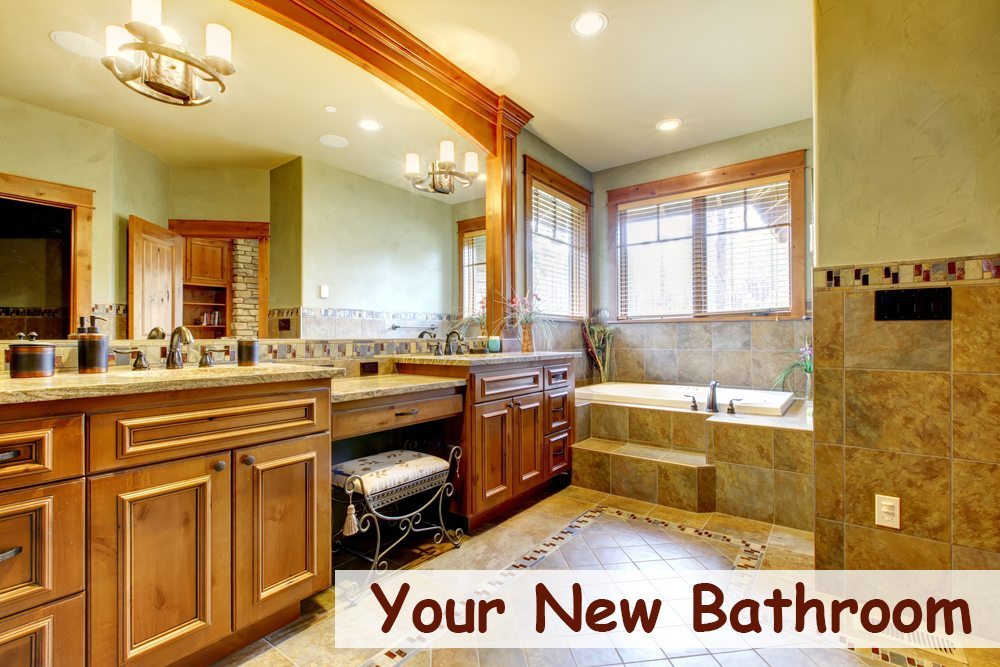
Your bathroom remodel requires a lot of different decisions, and each decision will help you to get to the finished product: a cohesive and well-designed bathroom that you will love for years to come.
Chapter 1: Pulling Decisions Together
Take your time and brainstorm everything you want in your bathroom. Create lists that will help you narrow down each decision. You should have a list of everything your bathroom needs to have at the end of the day. This list will most likely be comprised of the features that are the whole reason why you’ve started this process in the first place.
You should also create a list of things that you’d want to have in your new bathroom. These are things that might be able to be incorporated by your contractor based on your available space and budget. These items are not critical to you being able to enjoy your space.
Try to visualize your new bathroom and how it would best fit the needs of everyone in the household. This may help you to spot areas that you didn’t think about and make sure that all of your needs are covered.
You will want to do a lot of research to see if you can find out what other people have done in their bathrooms to get an idea of what you’d like to see duplicated in your bathroom. Talk with your contractor about her past remodels. It is not uncommon for her to have plenty of ideas that will help you think about what worked well for her past clients and what didn’t work. Your contractor is your partner in this process, and it’s beneficial to them to help you to decide on all the options that you’d like to see as a satisfied client.
You have a lot of decisions to make from the color scheme that you’ll decide upon to whether or not you want to go with a shower enclosure rather than a tub. Think carefully about what will suit your needs in the long run. Most importantly, have fun! This can be an exciting and fun process to go through if you have the right mindset.
Contact us today to get started on the remodel of your dreams. We're here for you.
How to Remodel Your Bathroom Into a Relaxing Retreat
While you may spend less time in the bathroom than you do in other rooms in your home, that doesn’t mean you shouldn’t put just as much effort into the perfect lavatory as you would into your dream bedroom or kitchen. Today, your bathroom may seem only useful for its Spartan functions, and you may think of it as a corner of your house with a singular purpose. But, tomorrow your bathroom could become a prized cornerstone of a relaxing, beautiful, and well-rounded home. Here are five things to keep in mind if you want your bathroom remodel to result in a relaxing retreat.
1. Don't Leave Anything off the Table
Just because you’ve always had a certain tub or sink doesn’t mean that you always need to. When renovating your bathroom, the more leeway you give yourself to make improvements and the more things you consider worth working on, the better. There’s a whole lot in your bathroom that you can switch up, from tiles, fixtures, vanities, and finishes, to sinks, tubs, commodes, faucets, and whirlpools. If you approach a bathroom renovation by only planning to work on a few things, you won’t give yourself the opportunity to create a real change. So, leave nothing off the table, and think about your powder room as a blank canvas where anything could happen.
2. Use All of Your Space
Even if your bathroom isn’t huge, that doesn’t mean there isn’t room huge possibilities - you just have to be comfortable with thinking about ways to use your entire space. For smaller bathrooms, think about how small decorative elements like premium fixtures could make a big difference. Or, get bold with the colors you put on the walls to give your bathroom a whole new look. When decorating large bathrooms, think of more space as more opportunity, and think about how you can use every inch to create a room you can be proud of. Installing mirrors, creating adequate storage space, and painting two-toned walls are all tried and true ways to utilize the extra space in big bathrooms, but don’t stop there. Think about how every corner could be utilized for something - even if using every inch means leaving some spaces empty.
3. Balance Your Needs
Remodeling a bathroom doesn’t only have to be about function or form: good bathroom remodels balance your needs, and give you the chance to create a restroom that is both highly functional and spiritually rewarding. Before buying a tub, sit in it and see if it feels right. Before investing in cheap flooring, price out a more durable and slightly more expensive option, and see if you can afford springing for the quality choice that will last longer and avoid functional issues down the road. Don’t think that you have to invest entirely in things that look nice or entirely in the most practical options when remodeling your bathroom: keep both in mind, and balance your needs.
4. Don’t be Afraid to Call a Pro
Since the bathroom is often one of the smallest rooms in a home, aspiring DIY home improvers can make the mistake of thinking that it will be an easy project to tackle. But, there may come a time when you need to call a pro when remodeling your bathroom, and knowing when it’s a good option to call for an expert’s help is critical to the success of your remodeling project. Unless you have a lot of experience with plumbing, you should never attempt to move water lines or handle the intricacies of piping. And, unless you are qualified, you shouldn’t deal with electrical issues either - even if it’s for something as simple as wiring a heating control. Trying to do it all yourself can lead to disaster down the road, so call an expert before tackling any issue that you don’t feel totally qualified to handle.
5. Splurge!
For most home remodeling projects, price is a limiting factor. But, if you want to create a bathroom retreat you can be proud of, think of just one thing you can splurge on. Whether that’s the high-end toilet or a brand new tub, splurging on one item can make your whole bathroom feel luxurious. Don’t feel like you have to reach for the premium option for everything in your bathroom remodeling project, but give yourself the freedom to reach high for at least one aspect of your new lavatory. Your bathroom retreat will feel a lot more special.
RWC Windows, Doors and More has been family owned and operate for three generations, and our unique dedication to a high-quality home improvement experience is reflected in our craft. We leverage our deep and experienced education, our informed and practical take on product selection, and our unparalleled devotion to customer service to make sure that your home improvement project turns out exactly like you want it to.
To learn about how RWC can relieve your home improvement stress and help you create the bathroom sanctuary of your dreams, contact us today!
5 Lighting Tips for Modern Bathroom Decor
Lighting is one of the most important elements of a bathroom. Without adequate lighting, it can be difficult for home dwellers to get the most optimal use out of the space. It is important for lighting to go beyond being functional. The right lighting can provide both the proper mood as well as a modern and updated look. Keep reading to learn how to make the most out of lighting in a modern bathroom.
When thinking about adding lighting to the bathroom, do not limit yourself to ceiling lights. One great way to add light in the lavatory is to install lights that flank the mirror. Ceiling lights provide ambient light, but a bath bar or vanity light on the side of the mirror provides great light, especially for morning routine activities such as brushing teeth, flossing, applying makeup, and shaving. Side lighting is ideal because it reduces shadows while providing adequate lighting for detailed tasks.
Use natural daylight as a guide
Generally, we look our best in natural light. Sunlight has a way of bringing out the true color tone of the face, and naturally highlights makeup. Mimicking this idea in the bathroom is a great idea, as it will provide you with a good idea of how you will appear after you walk out the door. The first step in achieving this look is to choose white shades for the fixtures. Keep in mind that white does not need to be boring; they can be clear or frosted, or any other incarnation of a white shade. The bulb choice is also important for achieving a natural light look.
-
If you are using incandescent lights, they should be either warm or cool white or have a color temperature of 2700K and 3000K.
-
If you are using compact fluorescent bulbs (CFLs), make sure their Color Rendering Index (CRI) is at least 90. This measurement will assure they are displaying color, in the same way natural light does. The color temperature of the CFL should also be between 2700K and 3000K.
-
If you are using light emitting diode lights (LEDs,) you need to pay close attention to their brightness, as you do not want to choose a bulb that is too bright. As with the other types of bulbs, the color temperature should be between 2700K and 3000K and have a CRI of at least 90.
Layer the lighting
Ideally, the lighting in the bathroom needs to adjustable, so it provides the right amount of light whether you are getting ready for work in the morning or taking a relaxing soak in the tub in the evening.
One way to guarantee that there will always be an appropriate level of light is to install a dimmer. Using a dimmer will always give you the power to control exactly how much light is flowing into the area. It used to be that dimmers were only available for incandescent lights. However that is no longer the case. Dimmers can be installed and used even with energy-saving CFLs and LEDs.
Another way to adjust the amount of light in a room is to choose decorative fixtures for the ceiling light. Small chandeliers and semi-flush ceiling lights are both great ways to set the mood in a room.
Light fixtures can often be overlooked. In fact, many people just continue to use whatever the previous owner of a house had installed. Even homeowners who designed a bathroom from scratch do not generally change their light fixtures. The result ends up being a dated look that is still present long after the fashion has gone out of style. Simply updating the lighting fixtures can give new life to a tired-looking bathroom. Changing out light sconces is an easy and affordable change that can make a big difference. In the past, sconces could only be found in ultra-traditional styles. That is no longer the case. Sconces have become more sleek and modernized. Many sconces are available in modern styles such as blown glass or stainless steel designs that fit with most modern decors. Another great fixture choice for a modern bathroom is pendant lighting. These lights give a soft, updated look to any bathroom.
The right lighting choice can set the entire mood for a room. It can turn a simple bathroom into a relaxing spa. Consider placing some dramatic lighting over the bathtub. A small antique chandelier can turn an ordinary bathtub into a haven to escape to at the end of a stressful day.
The bathroom is one of the most-used rooms in a home. It is important that it is adequately lit for both utilization and style. Take some time to consider how the bathroom should be lit as well as how you want the finished project to look.
If you need advice on how to add modern lighting to your bathroom, contact RWC, our friendly and qualified staff can help give you the modern bathroom of your dreams.
7 Ways to Make Small Bathrooms Appear Larger
Having a small bathroom can be frustrating and can really cramp your style. But, fear not, there are ways to make your small bathroom appear larger. Read below to see how to do it without having to use a sledgehammer.
Tile all the way up
One way on how to make a bathroom look bigger is to make wise use of the tiles in the shower area. Having them go all the way up to the ceiling will give the illusion of more space. Often a tile-layer will stop an inch below the ceiling and finish the area off with an edge. However, this practice creates an unnecessary transition in materials that accentuates the lack of space. Further, this procedure can cost more than simply laying the tile all the way up to the ceiling.
Choose the right tiles
Small subway tiles are great, and they have their place. But, it is not in a tiny bathroom. Small tiles require lots of grout lines that break up space and make a room look smaller, which is the opposite effect you want in a small bathroom. A better option is to use bigger tiles that require a minimal amount of grout lines. Using bigger tiles will create one long line that extends the entire wall, which will give the illusion of more room. Try to stick with the same tiles throughout the room as well to give it a feeling of unity and cohesiveness that will exude a feeling of spaciousness.
Use clear glass in the shower
Having a clear glass door on the shower will also create the illusion of additional space because it will allow extra light to come in. Using a textured door will give the appearance of an additional wall that makes the small space appear even smaller.
Use recessed cabinetry and shelving
Cabinets and shelves that protrude into the room can take up a lot of space. But, by recessing them into the wall extra space is created. Although the few inches that are gained might not seem like a lot, in theory, when it is put into practice, they make all the difference in the world. Creating recessed cabinetry and shelving is most easily done during an initial build. In order to retrofit them, walls will need to be reframed. But, for the space you will gain, it is worth the effort.
Install a pedestal sink
Pedestal sinks have far less bulk than a traditional vanity does. Removing an old bulky vanity and having a new pedestal sink go in its place will open up a lot of space in a small bathroom. Also, a pedestal sink or two can create a feeling of luxury that a small bathroom often lacks. Adding a tall, skinny cabinet behind a pedestal sink will help you replace the lost storage space you had with a traditional vanity without taking up too much space.
Swap out the door
Standard hinged doors take up an amazing amount of space. They require a lot of room to swing back and forth. Replacing hinged doors with pocket or folding doors is a great idea that will make a small bathroom appear larger. Pocket doors tuck nicely into the wall where they are safely out of the way and not taking up valuable space. Also, when they are open, they can add an element of depth to the bathroom. Similarly, folding doors can make a small bathroom seem more spacious, as they require less room to operate than a hinged door does. This is a key to small bathroom remodeling.
Add light
Light is a necessity when it comes to adding space to a room. Adding artificial light by adding accent lighting and strategically placing mirrors is an easy way to add more light to a small bathroom. The light that bounces off of mirrors and other shiny objects will add dimension and scale to the room. Bringing in natural light is even better than the artificial variety. The presence of natural light brings a feeling of warmth and comfort to even the smallest spaces. Adding a large window or a skylight to a small bathroom can bring in an extraordinary amount of light and make it look like it is fit for a king.
Being stuck with a small bathroom does not have to be a death sentence. Using some tricks and techniques and making some small structural changes can make even the smallest of bathrooms objects of envy. Creating a bathroom with the illusion of space is best done with the assistance of a professional, like the folks at RWC Windows and Doors. We have been a family owned and operated business for three generations. We are dedicated to providing our customers with a unique home improvement experience. Contact us today to see how we can serve you!