
NJ Home Renovation Permits Explained: Windows, Doors, Kitchens & Baths
Edited: March 30th, 2026
Planning a home improvement project can be intimidating - you have to think about exactly what you want to accomplish, while also planning around construction and ensuring that your family can still be comfortable in your home while the work is being done. At RWC, we don’t want confusion about permits to add to your stress, so we’ve created this guide to help clear things up in terms of the services we provide and when you might need a permit in NJ. Remember that permit requirements differ based on the town you reside in. We encourage you to contact your town’s building department for more information about the particular permit you may need.
Why Do I Need a Permit to Update My Home in NJ?
When planning to install new windows or remodel your bathroom, you might wonder why you need a permit. Towns throughout the state require permits for construction projects in accordance with the Uniform Construction Code of the State of New Jersey (UCC). This statewide code was signed into law in 1975 and has been maintained and updated over the years to ensure that construction projects in New Jersey are completed safely. The UCC contains technical subcodes referencing national performance standards for technical processes completed during a home renovation project. The UCC is upheld by those involved in all parts of a renovation process, including municipal officials, construction officials, subcode officials, and inspectors. Some towns have their own department dedicated to enforcing the UCC. Their other responsibilities in the town may include:
- Issuing permits
- Scheduling and conducting inspections
- Condemning properties
- Registering contractors who are not yet state-licensed
Although it might seem like a hassle, permits ensure that work is completed safely for both your contractor and your family. When work is completed according to state codes, you can trust that elements of your project, like plumbing, gas, and electrical work, were completed according to the right safety regulations. Smaller-scale projects, like painting a room in your home, repaving your driveway, or installing new flooring, do not usually require a permit.
Permits for Window Replacement and Installation in NJ
Those looking to modernize and refresh the exterior of their home in NJ have convenient access to our window installation and replacement services, with window products from the top brands on display at our West Caldwell showroom. But how do you know if you need a permit for your windows project in NJ? In most cases, a permit is not required if you are planning a direct window replacement - when the size of the window space does not change (or when window inserts are fitted directly into the previous window frame). If you are changing the size of your windows, you will need a permit because your wall structure is also changing. If any electrical work is included in your window project, you will need an electrical permit.
Permits for Door Replacement and Installation in NJ
Our team at RWC has experience installing and replacing all types of doors, including entry doors, patio doors, and storm doors in NJ. We also provide hardware from top brands such as Yale, Schlage, Emtek, and Baldwin. Door permit requirements are similar to windows in that you do not normally need a permit if you plan a direct door replacement with no sizing change. You should not need a permit if you are replacing the glass portions of an exterior door. Types of projects like those listed above are considered to be “ordinary” and do not require a permit since no change to the wall/structure of the house needs to be made. A more significant project which would require a permit in terms of doors would be the addition of a door where there was not one before, as this would require cutting a hole in the wall of the home. If you plan on enlarging your door, whether the project is focused on your entry door or backyard patio doors, you will need a permit due to the necessary wall alterations.
Permits for Kitchen Remodeling Projects in NJ
Regarding permits, kitchen and bathroom projects are a bit more complex than windows and doors. This is because these types of projects have many moving parts and often require plumbing and electrical work (if a full remodel is planned). Smaller kitchen projects, like removing and replacing cabinets in the same location or replacing a faucet, do not require a permit. If you are planning a small update and wondering whether or not a permit is required, it is best to call your town’s Building Department and confirm before you get started. Certain aspects of a kitchen remodeling project will require a permit to follow all relevant construction codes properly.
- Door and window work - As we discussed above, direct door and window replacements do not normally require a permit. However, if you are changing the size of doors or windows in your new kitchen, or creating space for a new window or door, you will need a permit from the town.
- Electrical work - New lighting in your kitchen will require a permit, along with rewiring your kitchen for a new appliance. Permit requirements in this area are usually more strict because there is a high risk of fire if electrical work is not up to code.
- Plumbing work - Plumbing permits will be needed for certain aspects of your kitchen remodel, such as adding a new sink, changing the location of your sink, and adapting sewer lines.
- Building permits - The last of the three types of permits normally needed for a kitchen project (along with electrical and plumbing permits) is a building permit. You will need this type of permit for your kitchen project in NJ if you are taking down a wall or making other changes to the structure of your home. A building permit is also needed for flooring and tile updates. This is all to ensure that your kitchen updates will not compromise the structural integrity of your home.
This may all seem complicated, but obtaining a permit is a simple process that is essential to any successful renovation project. Please contact your town for more specific information about the permit process and costs.
Permits for Bathroom Remodeling Projects in NJ
If you plan to make a minor bathroom update in your home, such as directly replacing your faucet or toilet, you will not need a permit. However, just like with kitchen remodels in NJ, larger bathroom updates will require a permit so that all work completed is done so in accordance with the UCC. A permit will be required in NJ for more extensive updates, such as changing the fixtures' locations or altering your bathroom's floor plan. You will need some combination of electrical, plumbing, or building permits if you are planning the following updates as part of your bathroom renovation:
- Changing the location of bathroom fixtures such as your sink, toilet, or shower/bath
- Structural changes to the bathroom walls
- Installing new electrical wiring/adding circuits
- Adding skylights
- Adding new doors or windows
- Putting in a new water heater
By default, most bathroom remodels in NJ will require a permit of some kind because they normally involve plumbing or electrical work. Whether working with a contractor or planning a DIY project, you should contact your town’s Building Department to ensure you have the permits you need before you start. RWC is licensed and certified to perform permit work in New Jersey and will ensure that every part of your home remodeling project is completed safely.
How Do I Get a Permit for my NJ Renovation Project?
In most cases, you can obtain a permit for your kitchen, bathroom, windows, or door project through your town’s Building Department. Each town is slightly different, so the exact process may vary depending on where you live. Your town’s officials will also let you know when you need to schedule inspections of the space you plan to renovate. Once your permit has been paid for and approved, you should be ready to start your project! We advise you to be wary of any contractors who dismiss the need for permits or insist on operating without them - this is a sign that they may regularly perform unsafe and unregulated work. Working with a licensed and certified team like ours at RWC is the best way to ensure that your project will be completed according to state codes and safety standards.
Get Your Next Home Project Done Right with RWC
Homeowners planning a kitchen, bathroom, windows, or doors project in NJ can trust RWC to help them get the job done right. We will gladly answer any questions you have about permit requirements for your project and will walk you through our showroom so you can choose the products and brands that best reflect your vision. We take the stress out of home remodeling by providing comprehensive and transparent service while maintaining communication with our clients throughout the project. We would love to hear about your next project and help you get started - contact us by calling (973) 227-7123 to schedule a free consultation today!

Bathroom Remodel Ideas & Design Trends: What's In and What to Avoid
Edited: March 29th, 2026
Top Bathroom Design Trends and Remodel Ideas
Your bathroom should not only be visually appealing, but also well-equipped. Surprisingly, bathroom design trends are evolving more rapidly than those for the living room and kitchen. In recent years, bathrooms have gone from being strictly functional to more aesthetic and fashionable spaces within the home.
If you’re thinking about renovating your bathroom, RWC has you covered. We’ve compiled a list of major bathroom design trends to help inspire your next project. Keep reading to see what’s in store as we head into the new year!
Wabi-Sabi Style
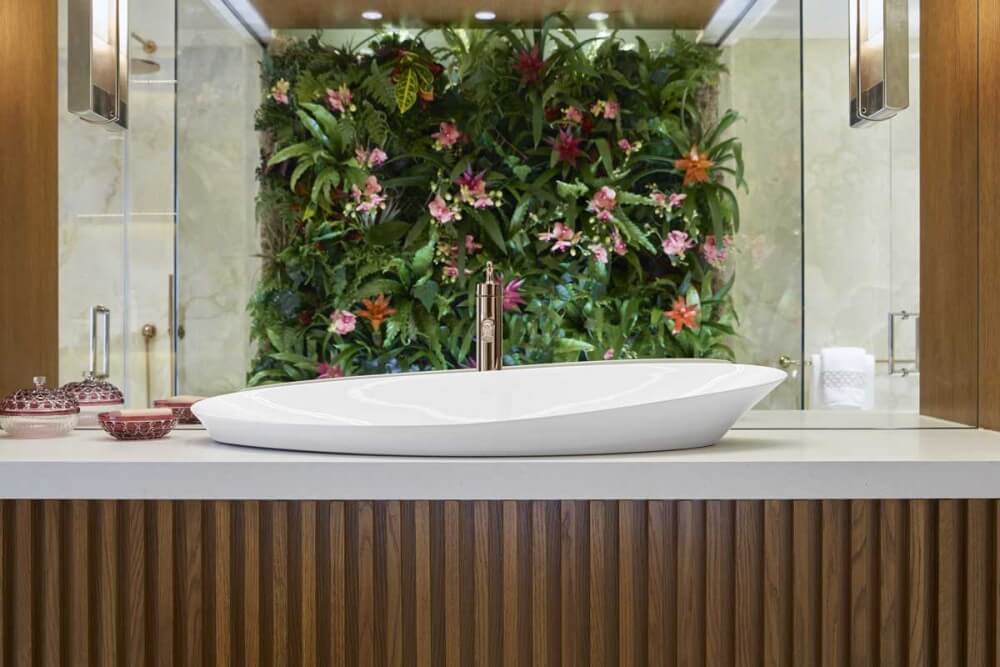
The main features of this trend are earthy and muted colors, organic shapes, floor tiles with subtle motifs, and plastered walls. The Wabi-Sabi bathroom style offers a particularly homely feel and relaxes the senses so you can enjoy spending your time there. Adding scented candles, plants and flowers, and wood accessories can also help to cultivate an organic environment.
Terrazzo Flooring
Originating in 16th-century Italy, Terrazzo is a composite material made up of colored chips of marble, quartz, dolomite, granite, or glass. The terrazzo floor has established itself as a favored alternative to the classic natural stone floor. The famous Venetian design offers an attractive appearance and is extremely durable, easy to care for, and suitable for underfloor heating.
Tub and Shower Remodel: Combining Your Shower and Bathtub
The two-in-one shower and bathtub concept is another top trend. It is best to put the shower zone near a window so you can ventilate the room directly after showering and to keep the rest of the room dry. If you are working with a small space to begin with, combining a shower and bathtub into a single area is a great solution for those who want to maximize practicality and convenience.
Copper or Brass Accents
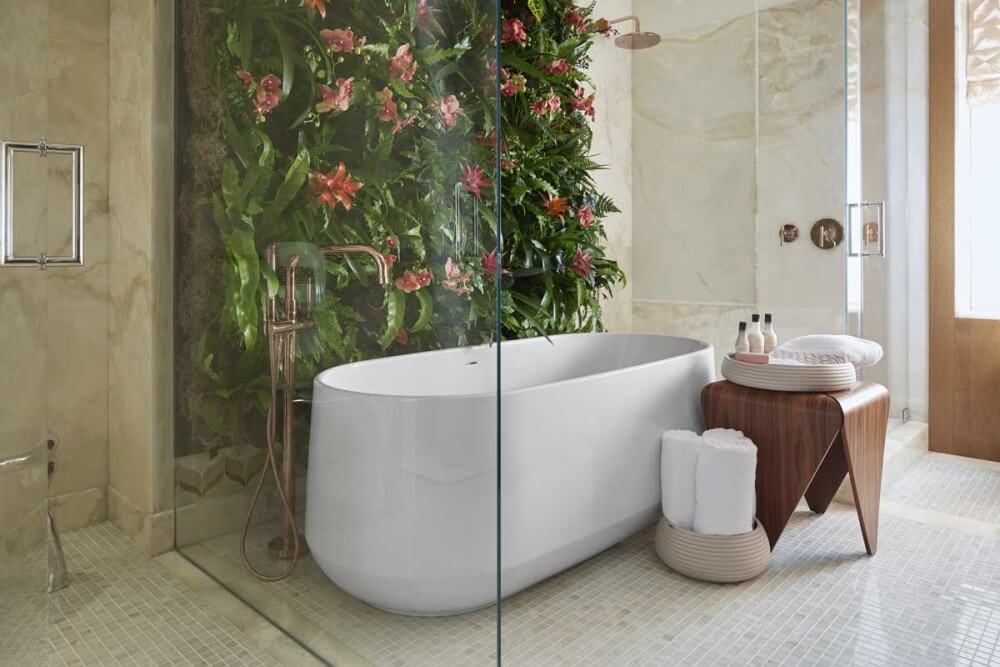
Copper and brass accents are heavily integrated into bathroom faucets, mirrors, light fixtures and cabinet handles. This bathroom trend can quickly turn any interior from ordinary to lavish. They effortlessly match with a wide range of materials, such as marble, wood, stone, ceramic, and many others.
Bathroom Tile Ideas: Geometric Patterns, Hexagons & Terrazzo
Geometric and patterned tiles are one of the leading bathroom trends. Some of the most popular shapes include hexagons, chevrons, bricks, and parquet-like tiles which can accommodate any preference or taste. The tiles can also have a glossy, matte, or other type of finish. Tiles are both practical and durable, making them an ideal choice for bathroom spaces.
Freestanding Sinks and Vanity Ideas for a Modern Bathroom
Freestanding sinks or washbasins with clear lines are making a comeback. They can be designed as a single or double solution made of high-quality ceramic or natural stone to give the room a modern look. Freestanding sinks can be perfectly combined with an illuminated mirror to create a minimalist design that is guaranteed to grab everyone’s attention.
Bathroom Wallpaper Ideas: Bold Patterns for a Statement Wall
Decorative wallpaper is the perfect trend for those who want to add more character to their bathroom. Highlight specific areas in the room with a stylish pattern, such as bold florals. The best types to use are fiberglass and vinyl wallpaper since they are water-resistant and waterproof. Wallpaper can be installed anywhere in the bathroom, even directly in the shower, in a steam room, or behind the toilet.
Full Bathroom Remodel Services in NJ — RWC West Caldwell
RWC is committed to being your trusted source for all your bathroom remodeling needs in NJ. With an extensive kitchen and bathroom showroom in Caldwell, decades of experience, and a family-oriented staff, RWC is your best choice in northern New Jersey when you need a remodel done correctly.
Conclusion
If you're ready for a bathroom renovation, contact us to discuss what we can do to build your dream bathroom. As experienced bathroom remodeling designers in NJ, we can provide both small bathroom remodeling and master bathroom remodeling ideas! Visit our showroom, or have a representative come to your house at your convenience to discuss how we can provide you with a great new bathroom or any other remodeling project your home might need.