

The Perfect Paint Colors for Every Room in Your Home [INFOGRAPHIC]
Choosing the perfect paint colors for every room in your home can be a daunting task, especially considering that there are thousands of paints in the market today. While going with one single color throughout may seem like an easy idea, it isn’t always the best as some rooms are better off with different colors. The kitchen, for example, requires a paint color that either makes it look sparkling clean (pure white) or a color that acts as an appetite stimulant (orange or red). The bedroom on the other hand requires a color that can evoke romantic vibes and deliver a relaxed feeling.
Here are key tips on how to pick the perfect paint colors for your rooms: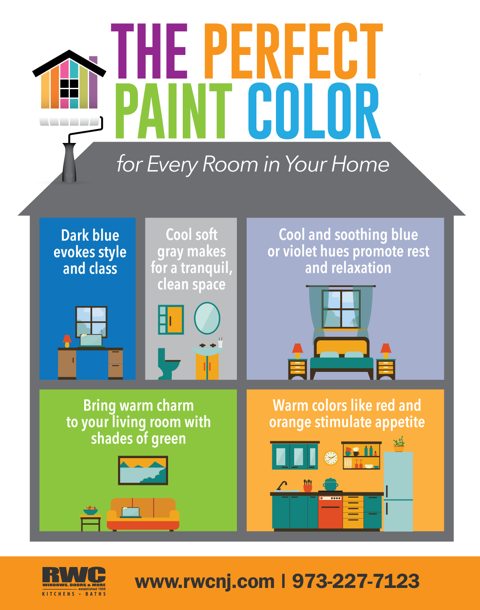
Kitchen
Let’s start with the heart of the home. The kitchen is often where most people start their days. Warm colors such as red and orange are believed to help stimulate one’s appetite and are always a great choice for the kitchen. The colors are also versatile and come in a wide range of shades that can really help your kitchen to pop.
White is also one of the perfect paint colors for walls in a kitchen. It gives the room a fresh and clean feel, as well energizes and brightens it up. It also works as a perfect background color, giving you a chance to play around with other colors for the backsplash, countertops and cabinets.
Bedroom
The bedroom is another important room that requires specific colors on its walls. In this space, you are most likely looking for a place to rest, relax, and get some sound sleep. You may also be looking for a wall paint color that helps evoke some romantic atmosphere. Cool and soothing blue colors are often the most commonly used colors in the bedroom. Muted and pale tones of blue have a lighter shade which creates a soft look that is perfect for a relaxation room.
A cool shade of violet is perfect for the walls as it has a soothing hue that is ideal for evoking spiritual healing and romantic vibes.
Living room
Living room walls are some of the easy ones to play around with. A living room sets the impression of your house to guests. Some of the best paint colors for walls in the living room include dusty pink, velvet-blue, shades of green, and shades of red as well as orange. Most shades of these colors are best at bringing a warm charm to your living room, and when matched up well with antiques and other interior decorations, they can easily leave your guests with a “wow” effect.
Bathroom
Natural paint colors are always the best for bathrooms. They offer a wide range of possibilities and can make even the smallest of spaces to still feel luxurious and serene. A warm and cozy taupe color paired with shades of light pink, green, or blue can be one of the best options for your bathroom. A cool and soft gray also works great in helping conjure up a feeling of tranquility and freshness. A soft turquoise reminiscent of the ocean or beach additionally gives you a serene spa-like environment to enjoy your showers.
Home office
The traditional black and white combination of office’s colors has still not gone out of style. You can opt for this combination or if you want to spice things up a little, consider a nice dark blue color or even a nice shade of red to evoke class and style in your office.
These are some of the perfect paint colors for the various rooms in your home. However, your choice of color for any room should always lean towards your tastes and preferences. The best way to find out the best color for your home’s walls is to see an already completed project in person so that you can have a picture of the end result in your head. Also, here is a list of 29 color ideas for every room in your room that you can check out. All in all, consider consulting a professional from reputable service providers like RWC in New Jersey for advice on the best room color combinations to use in your home.

4 Home Improvement Projects that Qualify for Energy Tax Credits
Taxpayers have been enjoying numerous energy tax credits from the federal government on home improvement projects that boost their home’s energy efficiency. At the end of 2016, the clock expired on some of the federal green energy and home efficiency tax credits. The exception was solar energy projects (which will be available up to 2021) and the EEM (Energy Efficient Mortgage) program which will be available indefinitely.
At the moment, here are 4 home improvement projects that may qualify you for energy tax credits as you prepare to file your tax returns in April 2018.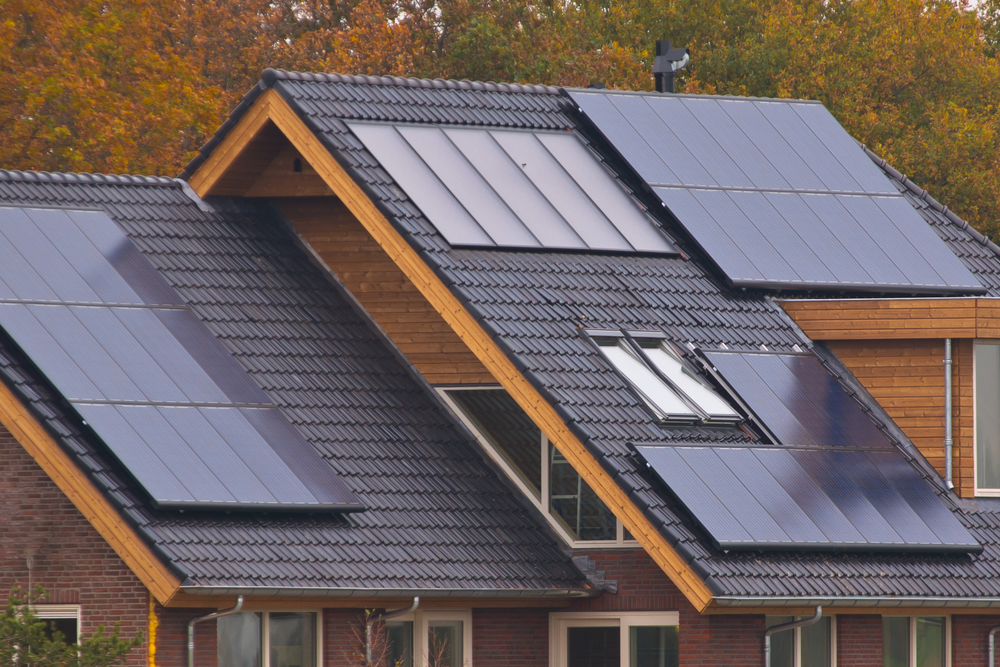
1. Solar energy home improvement projects
Installing Solar water heaters or solar panels may qualify for a tax credit equal to 30% of the total cost of the equipment and any associated installation costs. These tax credits are available through 2021, but will gradually decrease to 26% in 2019, 22% in 2021, and then expire by December 31, 2021. The tax credit on these home improvements can be claimed on newly constructed homes and existing homes (including 2nd homes). Rental properties do not qualify.
For the solar heaters to qualify for home energy tax credits, they must produce at least half their energy from solar and be certified by the SRCC (solar rating and certification corporation). However, all energy-star rated solar water heaters quality. Solar panels that qualify must be generating electricity for the residence alone. They must also meet the necessary electrical and safety code requirements.
2. Wind power generation projects
Installing small wind turbines power up your home, save on utility bills, and qualify you for energy tax credits. Small wind turbines qualify for a tax credit of 30% calculated against the total cost of purchasing equipment plus the installation costs. Lucky for you, there is no higher limit on the credit size! The wind turbines must have a generating capacity of no more than 100 kW, which is the maximum capacity output for turbines under ideal wind conditions to qualify you for the tax credit. The credit is also only applicable to new and existing homes (both primary and second), but not on rentals.
3. Installing geothermal heat pumps
Geothermal heat pumps will also qualify you for a tax credit equal to 30% of the total equipment purchase as well as installation costs. There is also no upper limit on the amount of credit you get here. To qualify, your geothermal heat pumps must meet certain performance and efficiency standards laid out by the Department of Energy. According to the Energy Department also, geothermal heat pumps consume 25% to 50% less electricity than the traditional HVAC systems. They can be used for water heating, home heating, and air conditioning. The tax credit applies to projects undertaken in new and existing homes (both primary and second), but not on rentals.
4. Installing fuel energy cells
Fuel energy cells may be quite expensive to purchase and install, but the federal government assures you of a 30% tax credit on the total cost of equipment and installation fees. However, there is an upper limit of $500 per 0.5 kW of generating capacity in this case. The system also has to achieve efficiency ratings of 30% and above, or have a generating capacity of at least 0.5 kW. The tax credit is applicable in existing and newly constructed homes only. Rental properties and second homes do not quality.
Takeaways
- Beginning January 2017, some of the federal green energy and home efficiency tax credits were discontinued
- Home improvement projects qualifying for tax credits include; solar, wind, geothermal and fuel cell power production projects
- Solar, wind, geothermal, and fuel cells power projects qualify for a 30% tax credit
- You may claim tax credits on projects either on your newly constructed home, second home, or rentals. Check the specifics of each, as the fine print varies.
If you undertook any of the above projects last year, apply for tax credit from the IRS by filing Form 5695 with your federal tax return. For more information on energy efficient windows, doors and more, contact the professionals at RWC Windows Doors and More right away!
How a Home Energy Evaluation can Save You Green
The idea of maintaining an energy efficient home isn't necessarily about the concept of, “Go Green!” in the sense of keeping an eco-friendly lifestyle. It serves the practical function of saving you some green in the form of spending on your monthly heating and cooling bills. Often, excess energy is wasted through subtle means. While you may not realize you're losing heat through a window or door draft, this loss adds up over time. Consequently, the more heated or cooled air you lose from inside, the more your HVAC system has to run. As a result, the more your HVAC system is running the higher your power bill is going to be.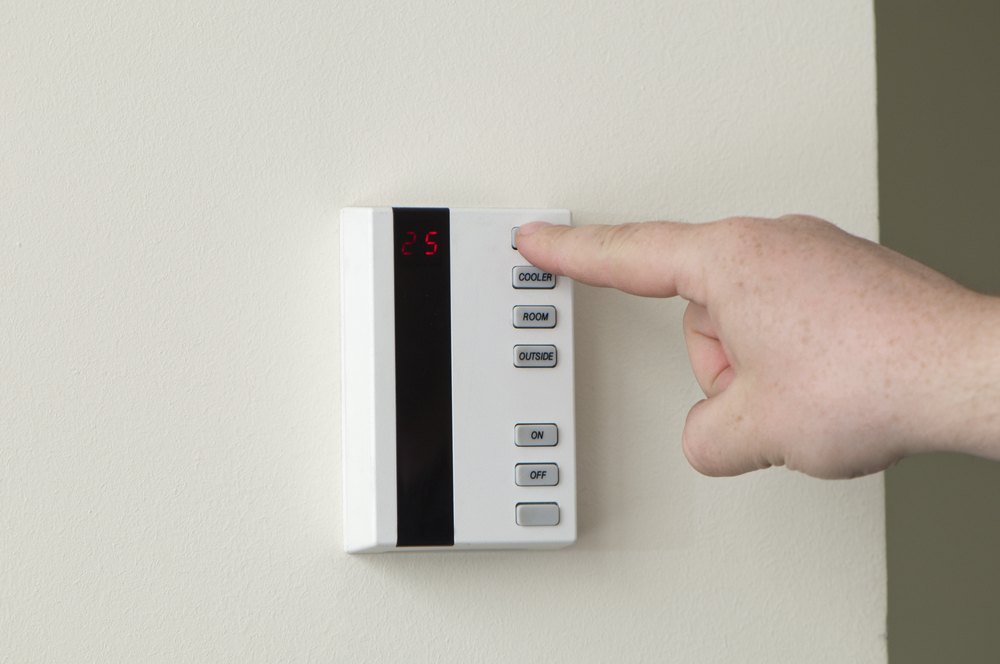
Conducting a Home Energy Evaluation
According to EnergyStar, you can conduct an informal home energy evaluation of your own home to determine potential weak points where you're losing money. Of course, if you don't work in the field you probably aren't going to be as efficient as a professional who understands common points of energy loss and has specialized equipment to evaluate such places, but you can certainly pay attention to what areas in your home always seem to feel cold during the winter, which rooms are never as comfortable as others, and check for noticeable drafts around windows and doors and then discuss with a contractor how to fix the compromised areas.
What to Expect with an Energy Assessment
Professional home energy auditing is going to start with the same type of assessment you've conducted, after asking about any problems you've noticed to review what might be causing them. Beyond that, the auditor will check the amount of insulation in your attic and in your basement or crawl space. Similarly, he may also check the insulation in your walls for integrity and make sure there is enough, especially if your home is older. During a thorough energy use investigation, the auditor might run a pressure test. This will tell them exactly where any air is escaping inside and outside your house. Additional tests may involve checking the temperatures in your floor and walls, or checking moisture levels in different places in your home.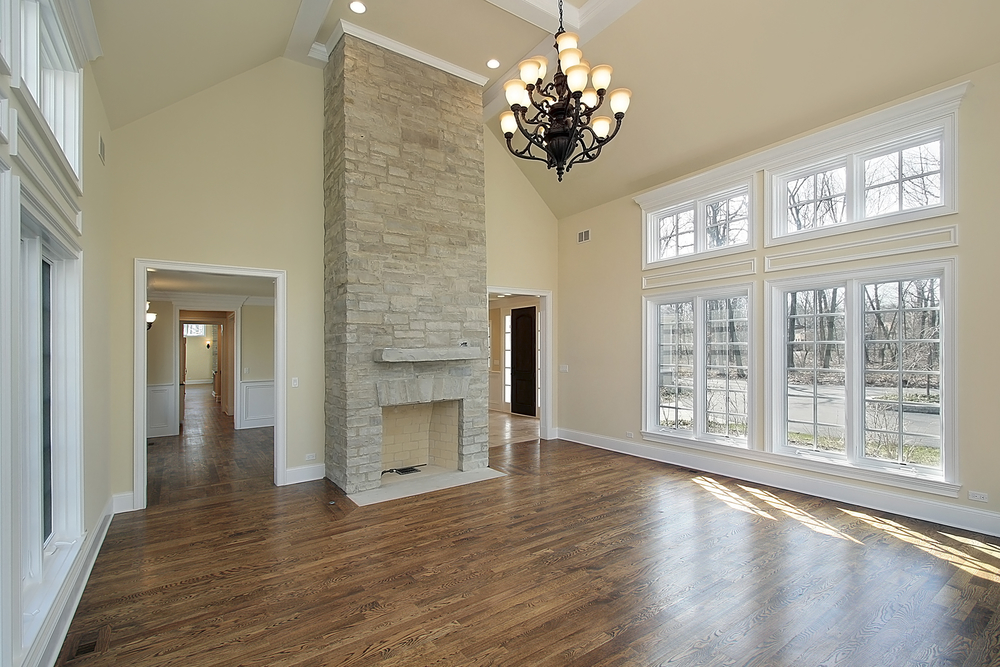
Common Ways to Save Energy
Hands down, the simplest way to improve your home's energy efficiency is with new windows. Windows can come out of alignment due to a variety of factors including:
- House settling over time
- Expansion in heat
- Contraction in cold weather
- Poor sealing
Compared to 5-10 years ago, there is better technology available with new windows. Likewise, doors are often a culprit of allowing cold air in and warm air out during the winter, or vice-versa during the summer. Replacing your old windows and doors with energy efficient options are a cost effective way to save energy and increase ROI.
Conclusion
- Conducting an energy assessment helps find which rooms are wasting power.
- Improving problem areas helps to lower your monthly electric bill.
- Perform an energy assessment to determine how to improve your home's energy efficiency.
- New windows are likely the easiest way to improve your home's energy efficiency.
- Doors are also a common source of drafts and energy loss.
What to Do Next
Once you've realized problem areas in your home, or need a professional contractor to assist in conducting a home energy analysis, contact us at RWC. We'll formulate a plan to make your house more energy efficient.
How to Select Trim Stains to Match Your Walls
Interior trim is one of the most significant aspects of a house décor that is often overlooked. Interior trim on walls can help you give your house some balance, highlight its core points of interest, and also set its character, style and tone. Trim is like the frame of a painting; particularly a stained frame, as it outlines and accentuates the beauty of what is inside. Here’s how to pick a trim color to match your walls:
Trim often takes the form of baseboards, window and interior door casings, crown molding, wainscoting and paneling and pillars as well as mantels. Most trims are constructed from wood, polyurethane and medium density fiberboard. However, trims come in different colors and stains which can be quite difficult to match with your already existing décor. Your tastes and preferences as well as the architectural style of your house will play a great part in determining the style of your wood trim color stain. So if you’re wondering what color to paint or stain interior doors and trim to match your walls, we have the answers you want below!
Painting stained trim can help you enhance and perfect the design style you envision for your home’s interior. Remember, as with any interior decor decision, you have to determine your end goal with the trim stains. What impression do you want the room to express? Do you want it to be modern, classical, sophisticated, dramatic, formal or just relaxed?
Here are tips on how to match the right trim straining with your walls: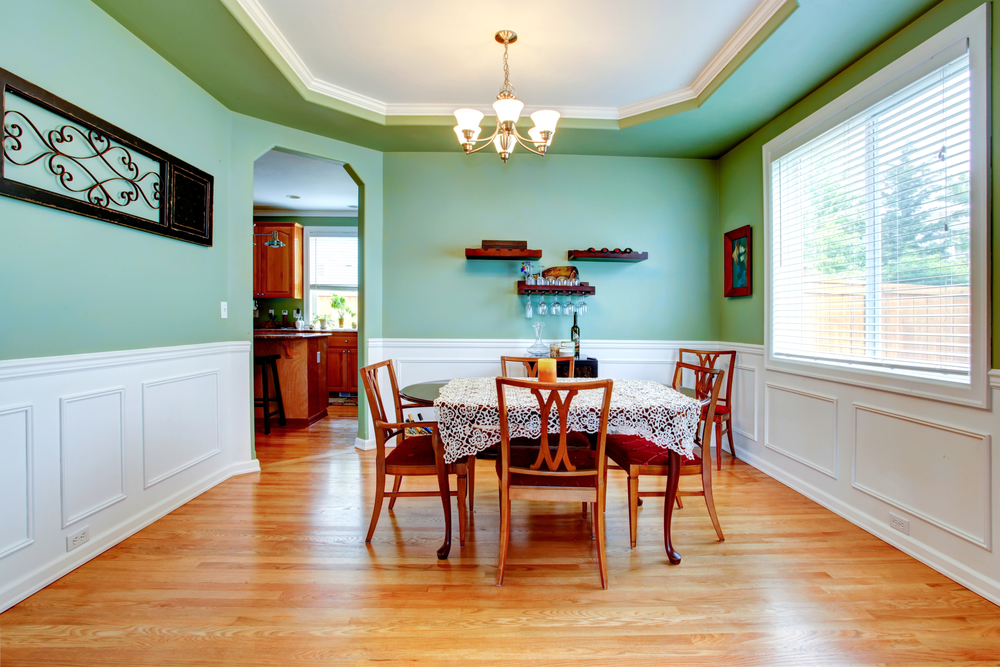
Matching Trim
For a contemporary space, it is recommended to go with a trim stain that blends seamlessly with the house’s walls. This can easily be achieved by painting stained trim color that matches that of the walls, or have a tinted version of the wall’s colors. Going with the same paint color for trims gives the room a unified, seamless and fresh look.
If your walls have a warm tone, the interior trim color ideas you should be considering should all be warm tones. Similarly, if they have a cool tone, it is best to opt for a cool trim tone. Staying with the same colors throughout prevents your house from looking disjointed and incoherent. In the case of open floor layouts, particularly where wall colors change from one room to the other, sticking with the same trim stain throughout creates a sense of cohesiveness throughout the home.
Light Trim
This is more common with classical and traditional interior designs. Many interior designers consider using white trim as the perfect way to decorate any house’s interior. White trims brighten up the space when used alongside dark walls. They make the wall color to pop out and also lighten up the space.
When used alongside light or muted wall colors, white trims make the wall colors to appear clean and crisp. Pure white trim staining often works great in rooms with great natural lighting as they have a classic reflective quality. For rooms with limited natural light, or those in northern climates, creamy whites with some warm undertones are better off than pure white.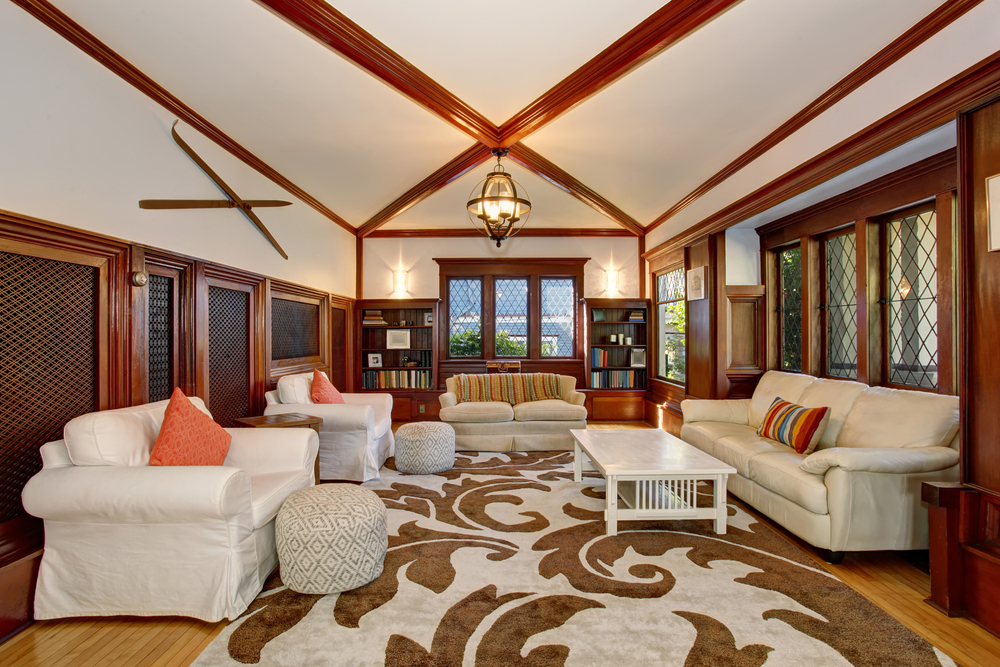
Dark Stains
The use of dark trim stains has been a growing trend. Dark trim gives a room more depth than the light or white trims. They are dramatic and focus attention on the window and door frames. Additionally, they contrast very well when used alongside some modern trendy wall colors such as soft aquas and powder blues. While black or dark brown are common trim stain colors, there are a variety of other colors and shades to choose from. Consider going for a trim stain that is only 2 or 3 shades deeper than your wall’s colors.
Painting Trim to Match Walls Takeaways
- Trims are imperative in accentuating your home’s interior décor
- Most trims are constructed from wood, polyurethane and medium density fiberboard
- The trim stains you select for your home will largely depend on your tastes, preferences and architectural style of your house
- You can opt for trim stains that are of the same color with your walls, or go with trim stains that are lighter or darker
All in all, the trim stains you select for your home will largely depend on your tastes, preferences and architectural style of your house. Our pre-finishing services can help you get started on your next project. Your door or window trim can be painted or stained right in our warehouse, meaning you’ll get the perfect trim color, guaranteed. If you’re ready to complete your next project, contact us right away.